Arrival – Back to Weligama
I landed in Colombo late. Very late. In fact, most flights into Sri Lanka seem to arrive at some ungodly hour of the night.
I’d arranged a transfer to a small guest house in Negombo, purely to grab a few hours’ sleep before continuing my journey south. It wasn’t somewhere I’d be rushing back to, but after a long flight it served its purpose.
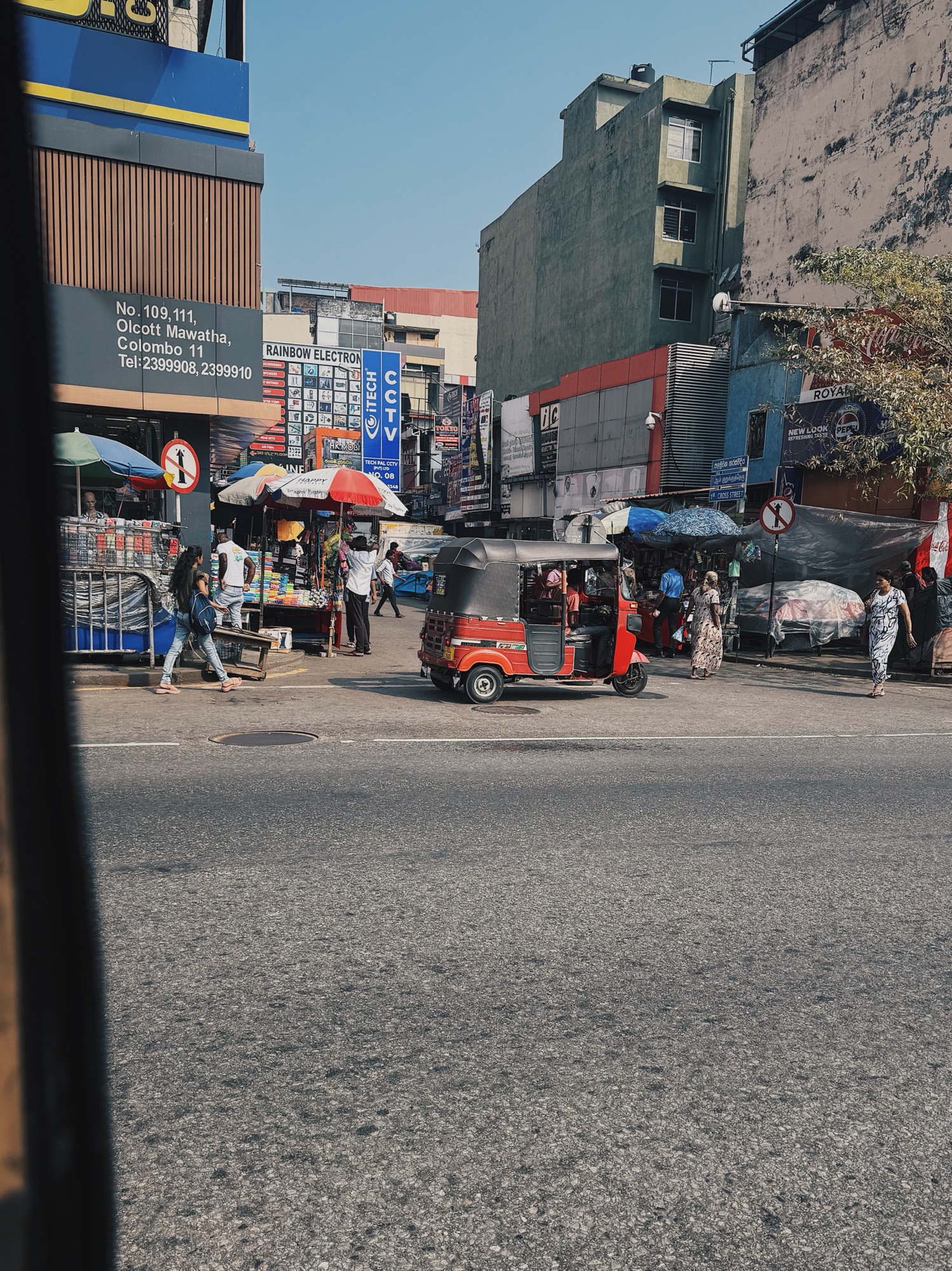
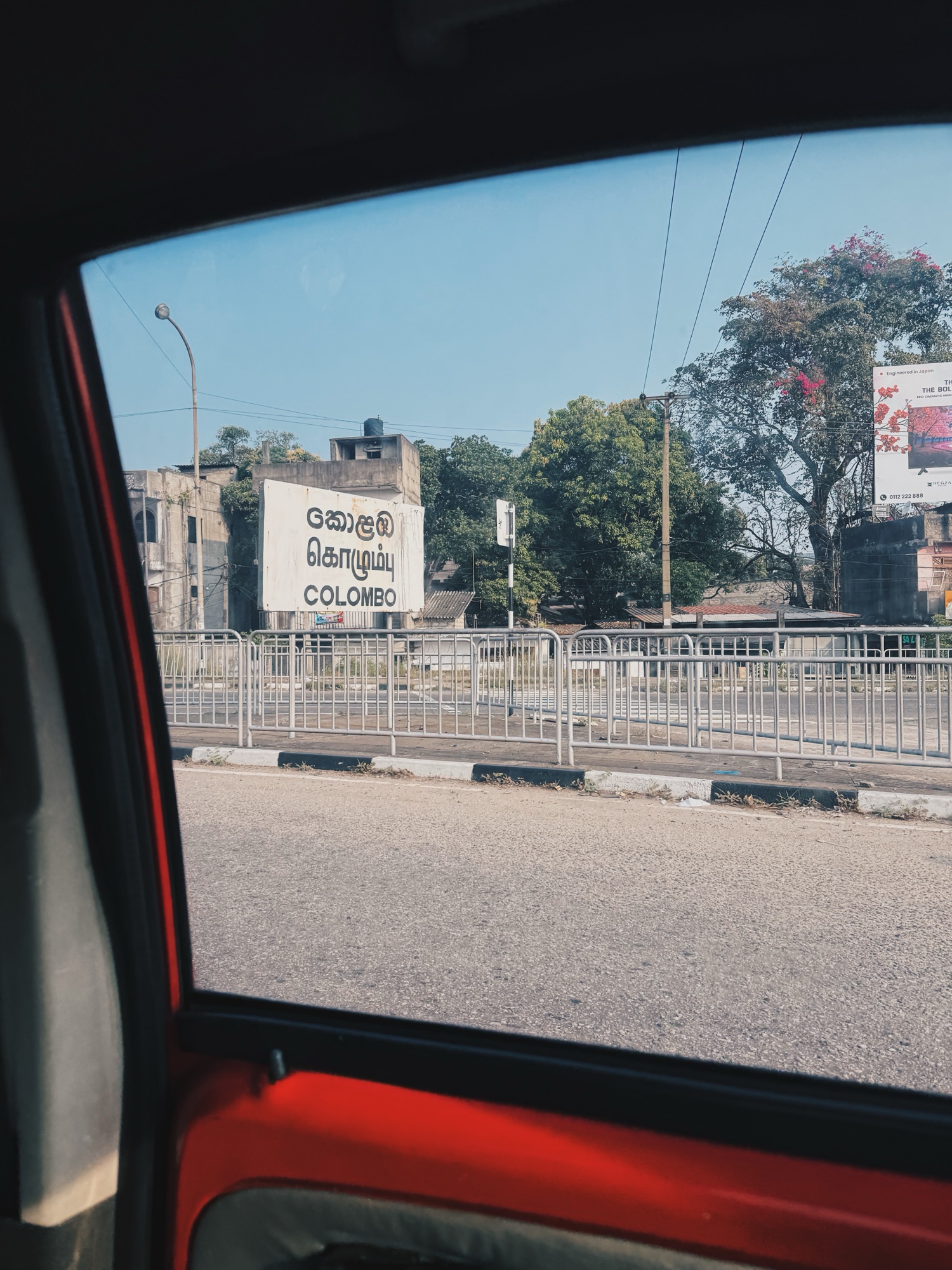
The following morning, I headed into Colombo for a strong coffee and a generous breakfast. I then made my way to Colombo Fort station ready for the next leg of the journey. The train to Weligama would take around four hours – or so I thought.
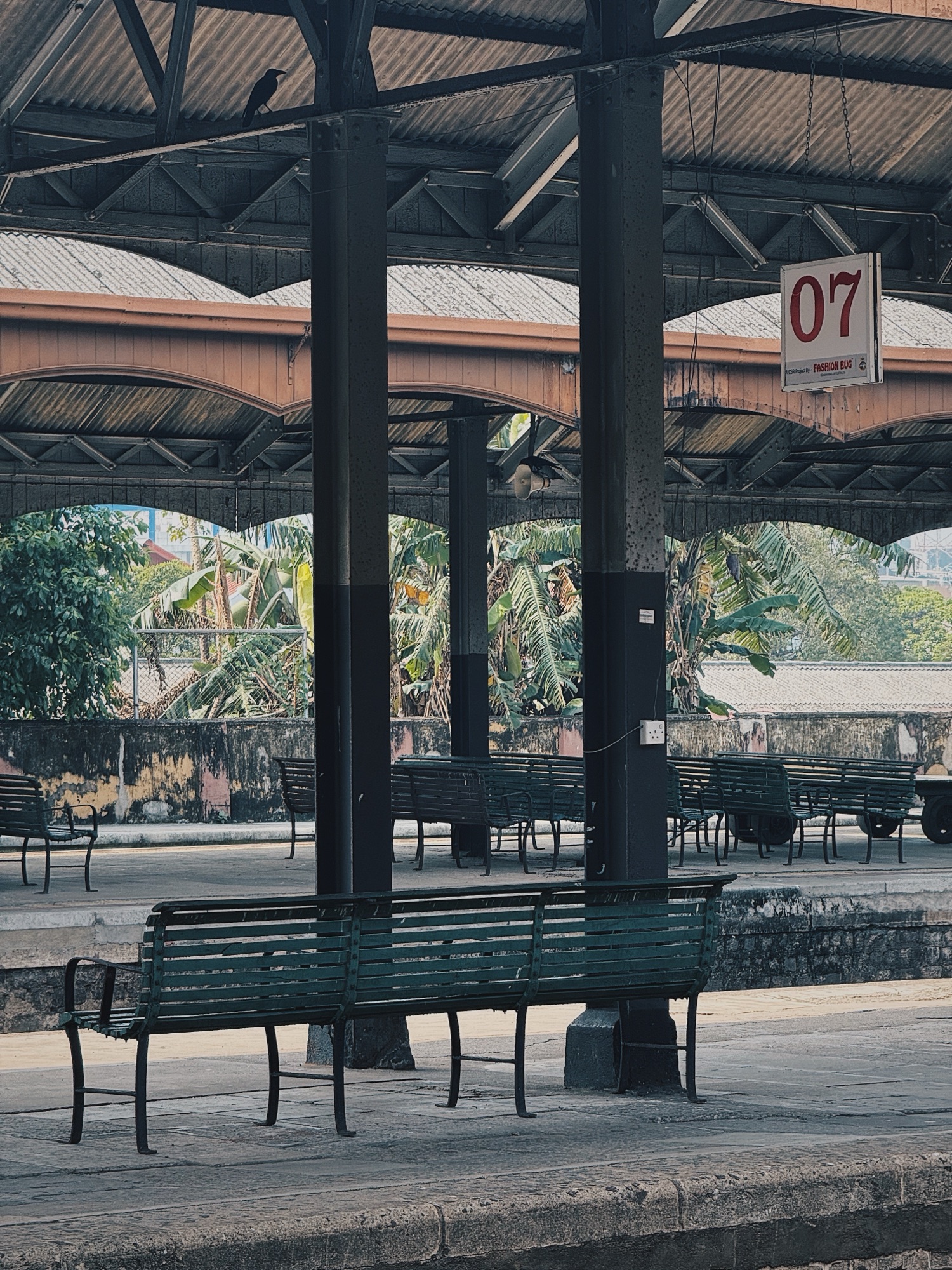
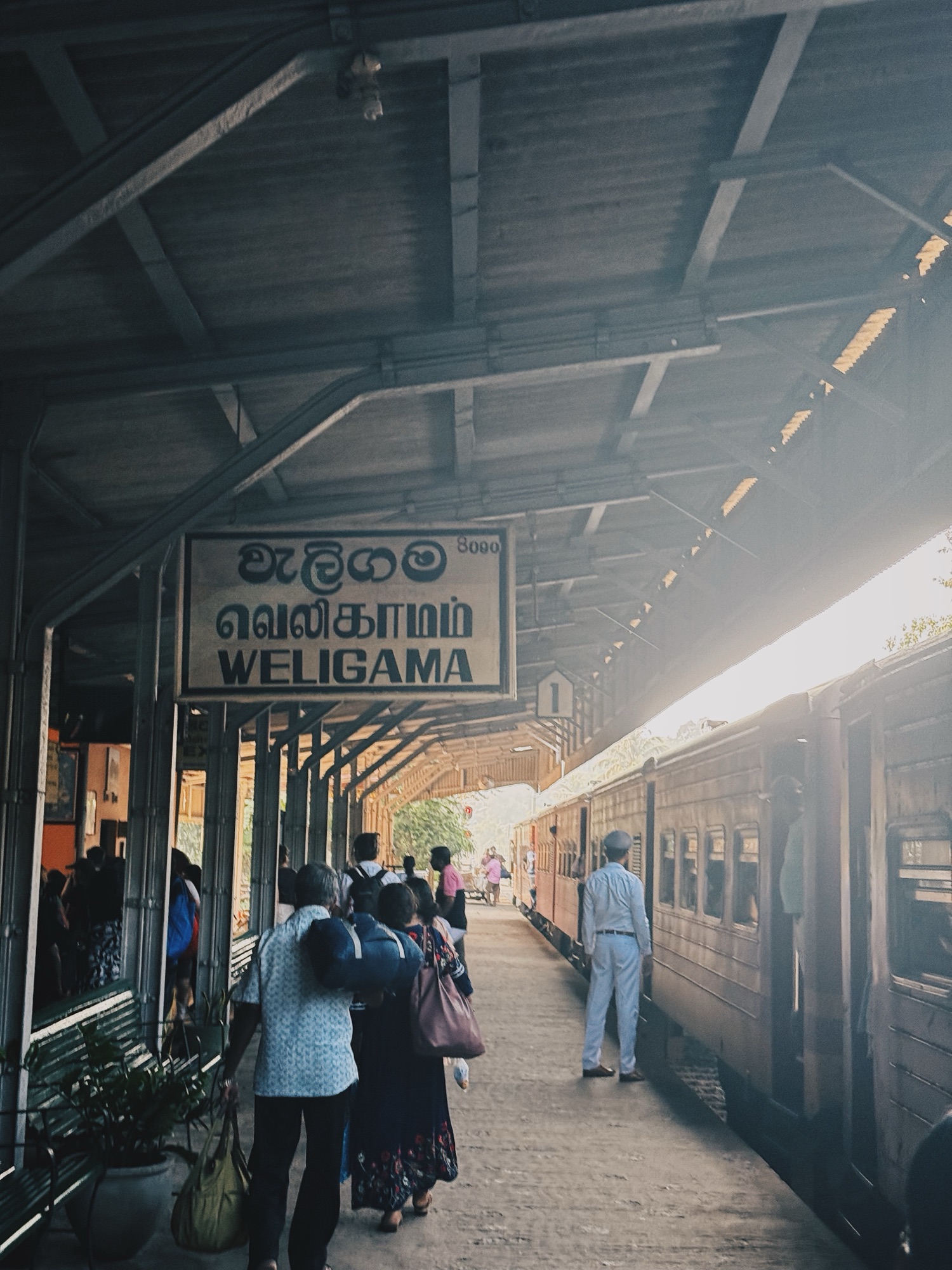
What struck me most when I arrived at the station was how quiet it was. The last time I’d passed through Colombo Fort Train Station it had been absolute chaos, packed with commuters, families and travellers. This time, on a Sunday morning, it felt strangely calm. The busiest place was the platform itself, crowded with tourists heading south for Sri Lanka’s peak season.
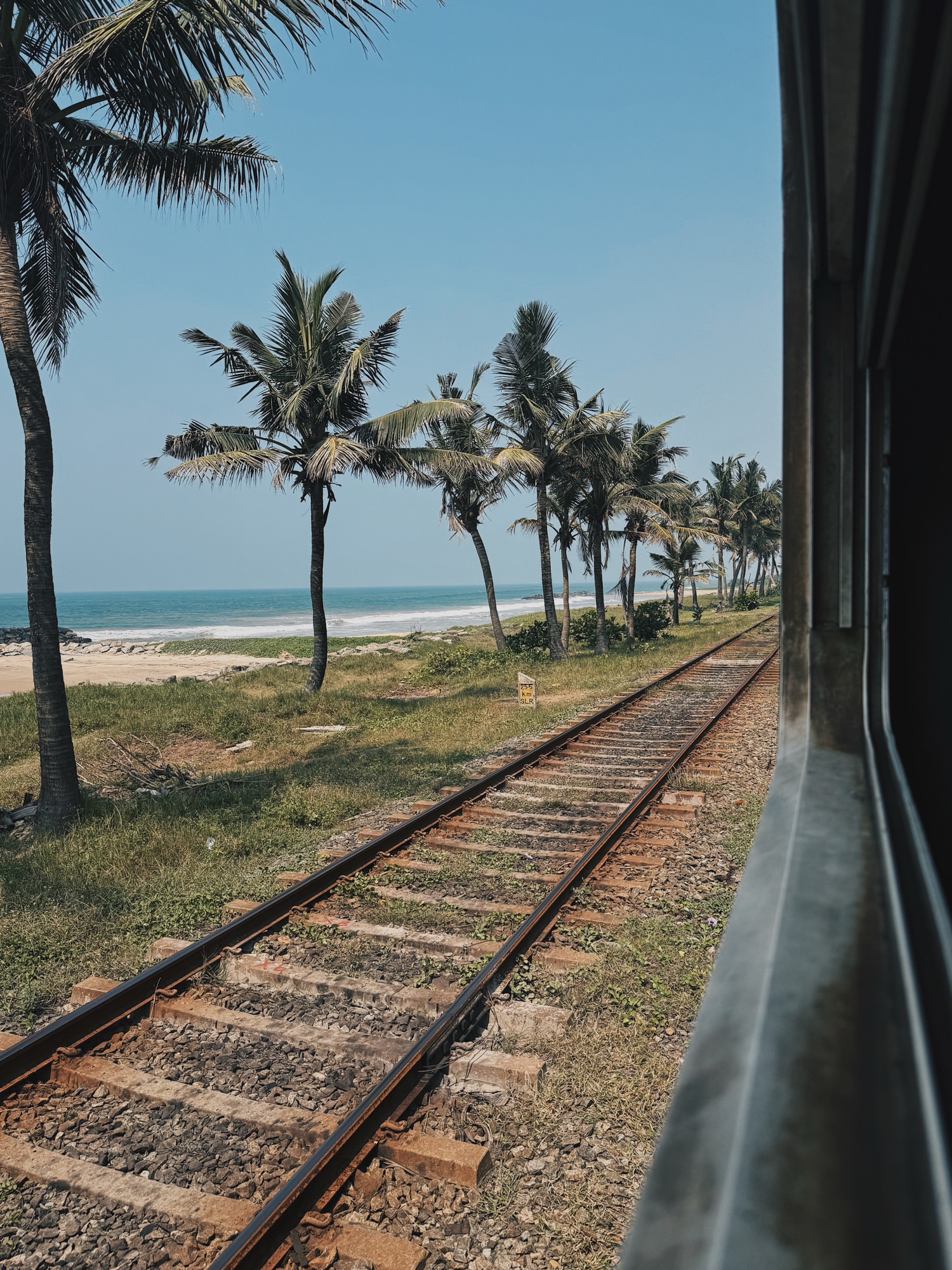
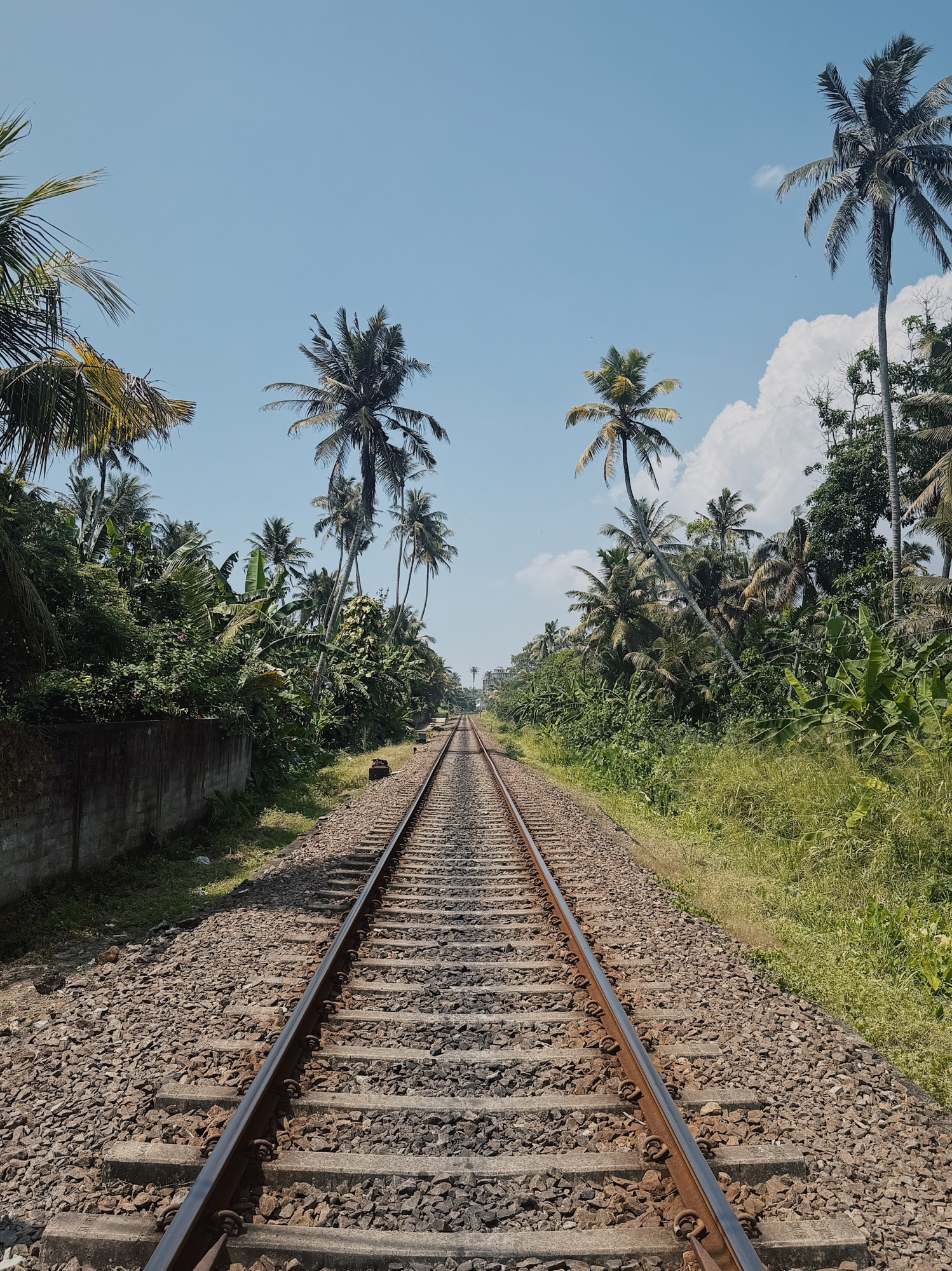
I squeezed onto the packed train and managed to claim one of the last remaining seats. The journey eventually stretched closer to five hours. There was no air conditioning, but the open windows let in a welcome breeze and framed an ever-changing view of palm trees, villages and glimpses of coastline. Some of my favourite memories from the journey were the families sitting nearby. The children were keen to practise their English and spent much of the journey chatting away, asking endless questions and laughing at my attempts to answer them.
As the train rolled into Weligama, it felt oddly familiar. Seven years had passed since my last visit, yet I immediately recognised the bustling streets and laid-back atmosphere. At the same time, the town had clearly grown. New cafés, hotels and surf shops seemed to line every road. (Old blog post from last time I visited, here).
Carrying my bags through the warm afternoon heat, I made my way to my home for the next week: Layback Surf and Yoga Camp.
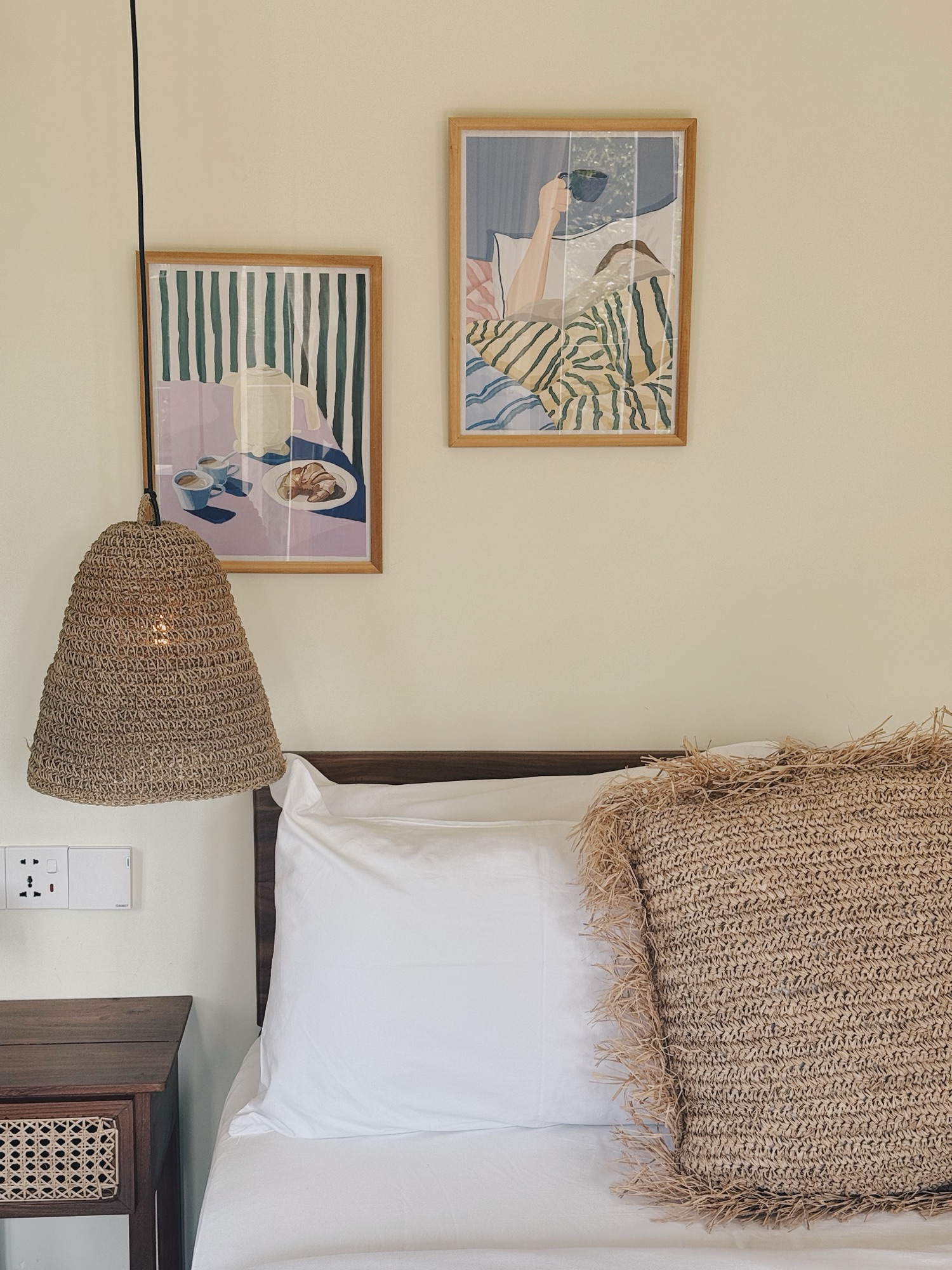
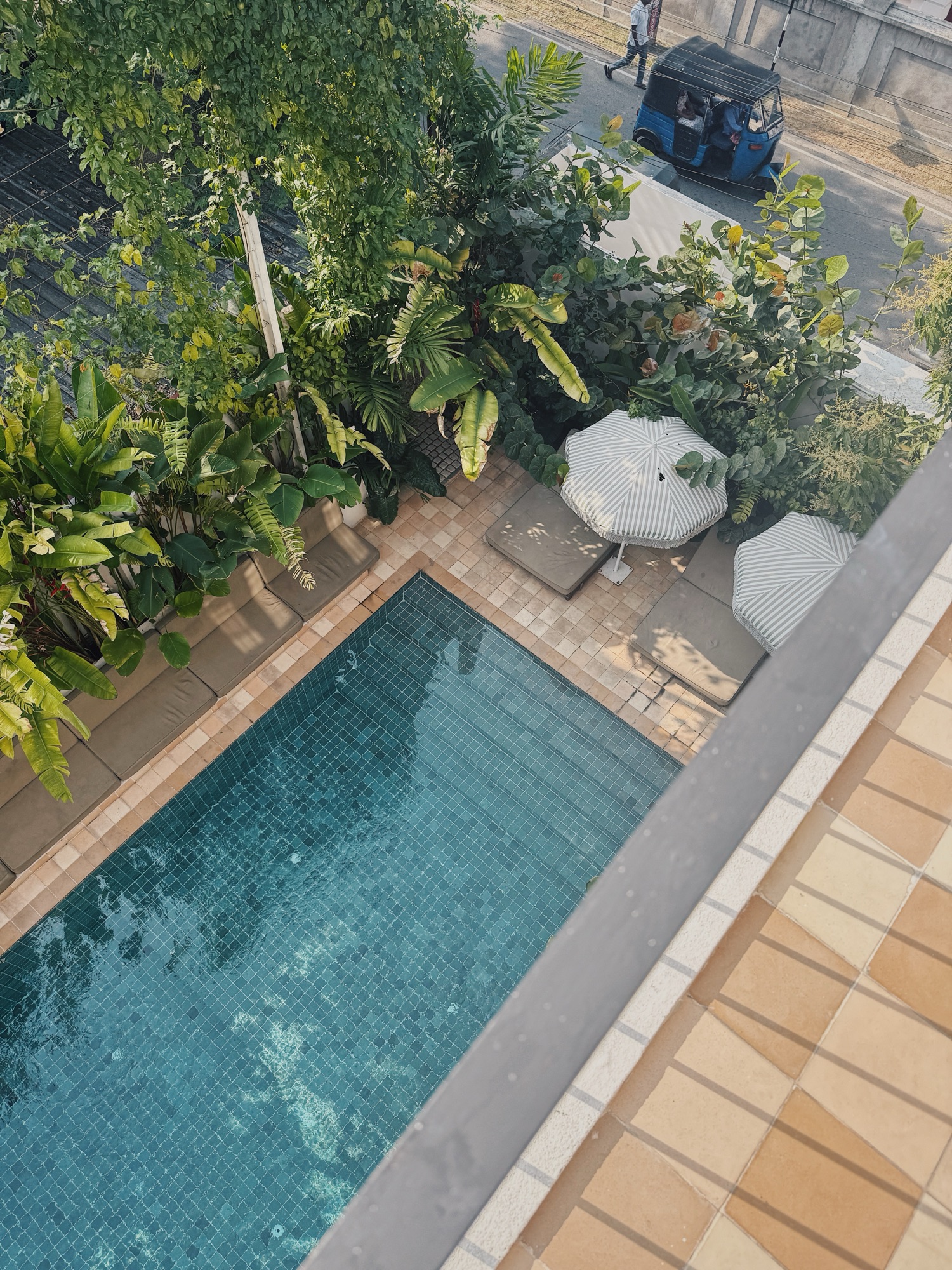
My room overlooked the pool, framed by tropical greenery, and within minutes of arriving I knew I’d chosen well. One of the reasons I’d booked Layback was the balance it offered. I wanted the social side of a surf camp and the chance to meet new people, but I wasn’t looking for an all-night party hostel. Having my own room felt like the perfect compromise.
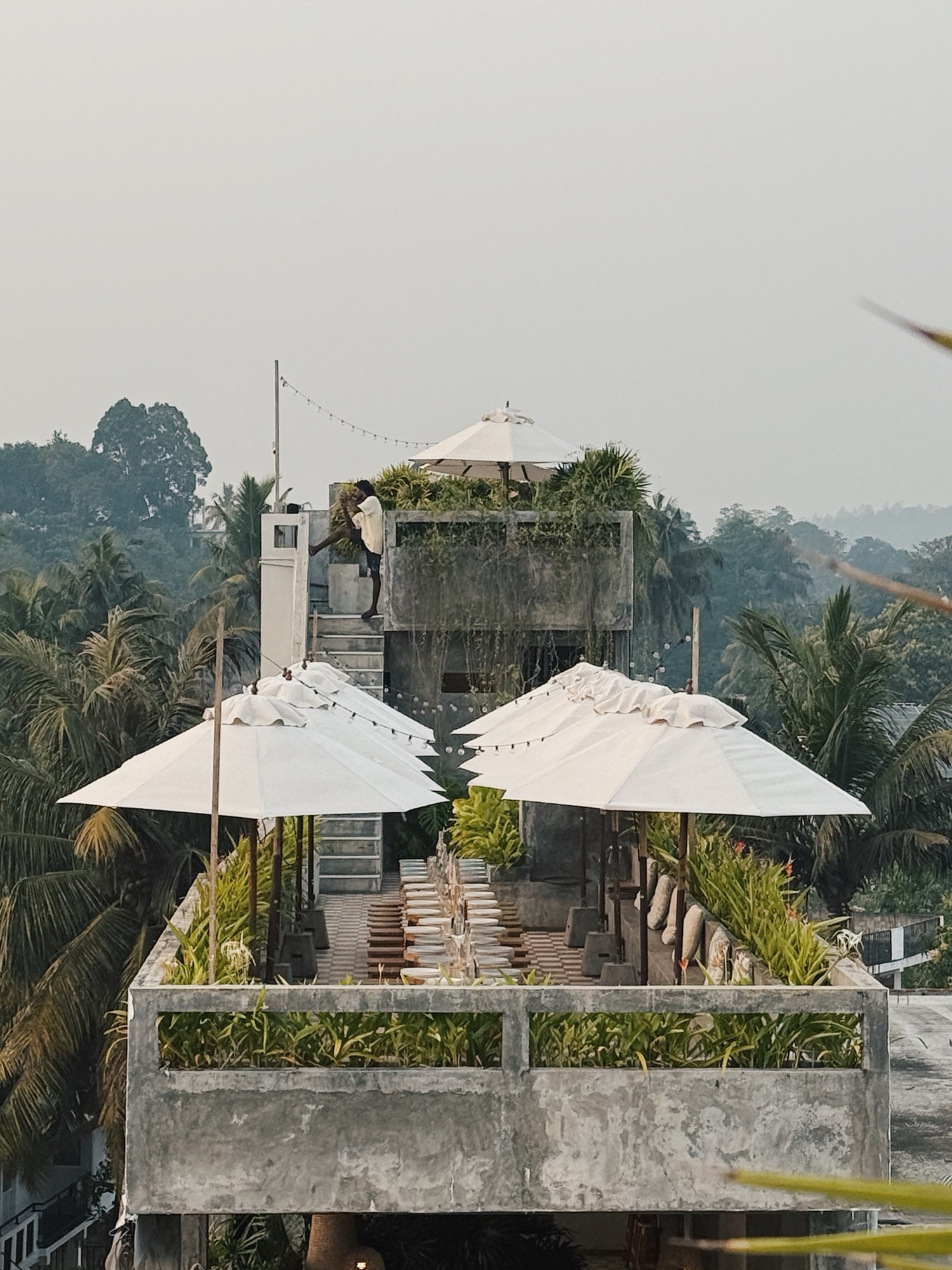
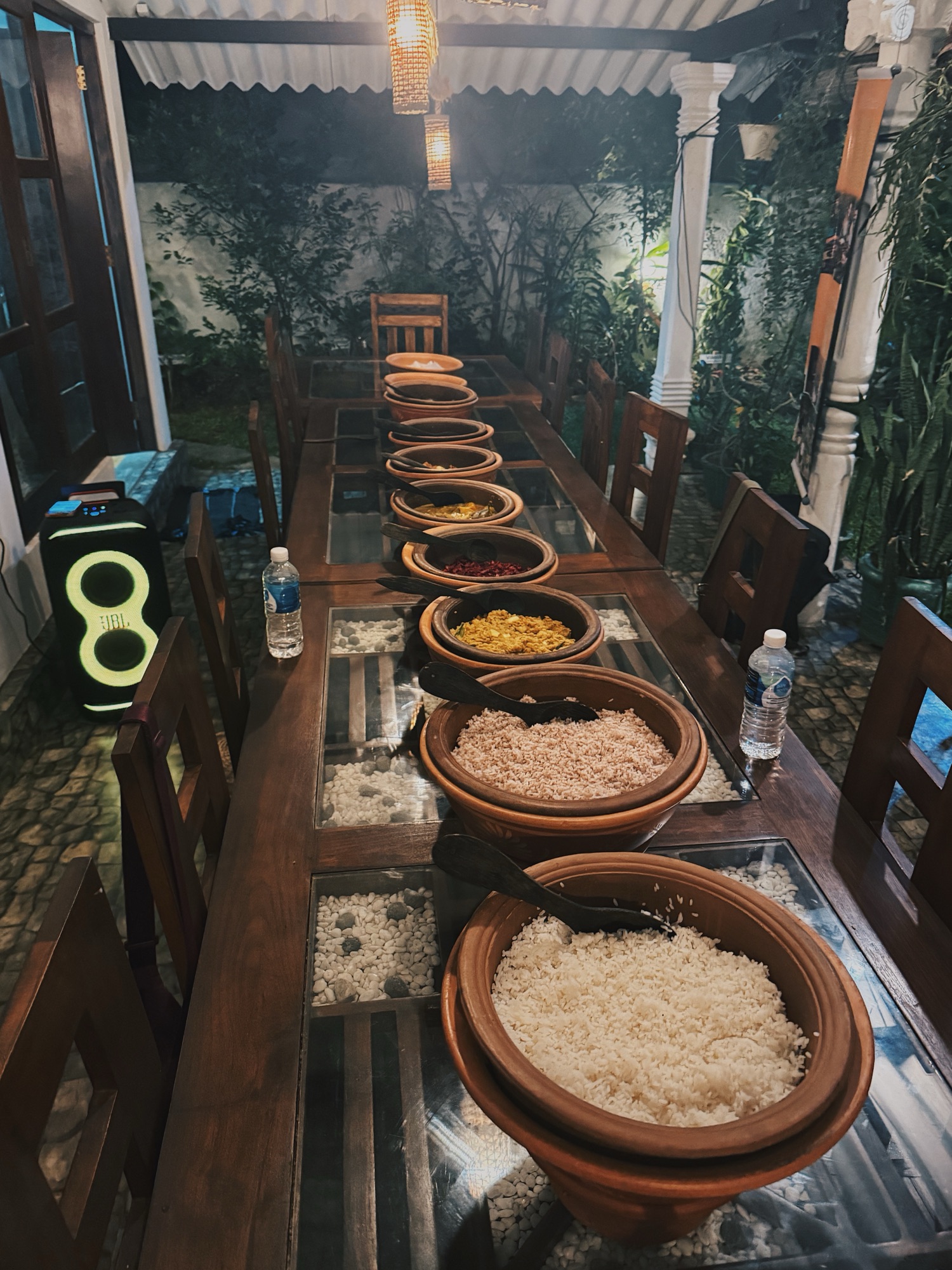
That evening, I wandered down to the beach for sunset. The sky glowed shades of orange and pink as surfers chased the last waves of the day. Later, everyone gathered on the rooftop for the welcome dinner: traditional Sri Lankan dishes served family-style around a long table. It was the first chance to meet the people I’d be spending the week with, and conversation flowed easily long after the plates had been cleared away.
By the end of the evening, any nerves had disappeared. A week of surfing, sunshine and new experiences stretched out ahead, and I couldn’t wait to get started.
Day 1 – Suncream, Surfboards & Sore Arms
The first morning came around quickly.
The night before, everyone had been assigned surf groups based on ability, which meant different schedules for surfing, yoga and the other activities throughout the week. Before arriving at Layback, I’d only surfed a handful of times, so I was firmly in the beginner group. I could occasionally stand up, but that was about the extent of my surfing credentials.
At 6am, I rolled into the yoga studio slightly bleary-eyed. But once we got moving, it was the perfect way to wake up. My muscles loosened, my body felt energised and, for a brief moment, I forgot how nervous I was about the surf session ahead.
After a quick change, it was time to head to the beach.
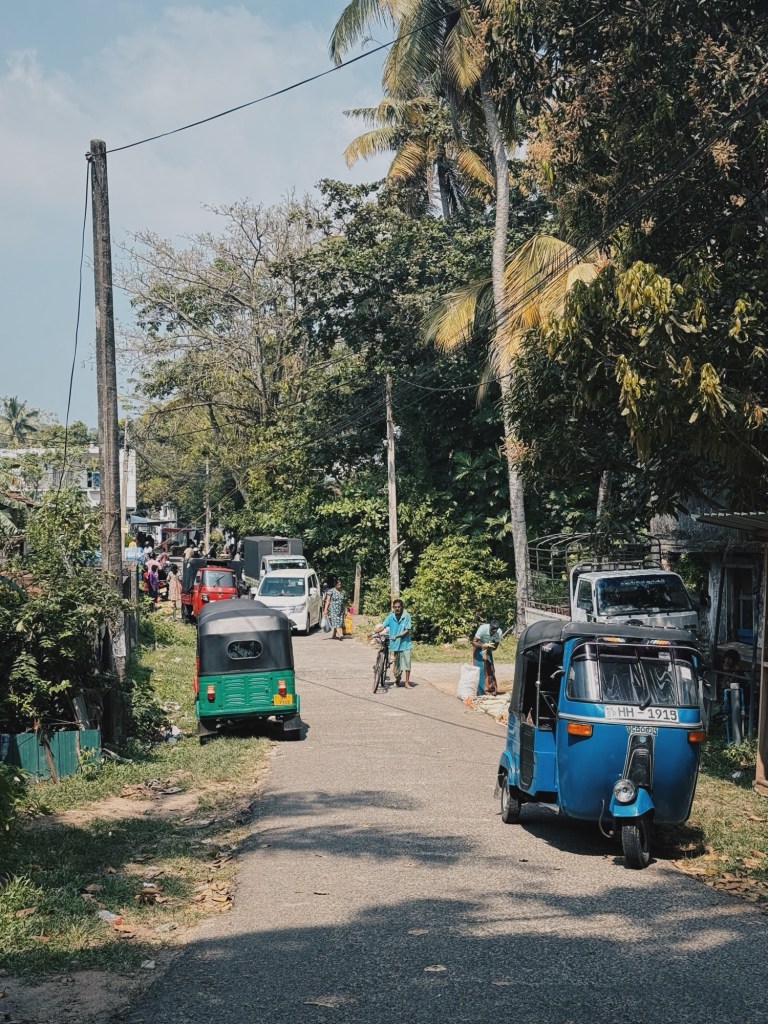
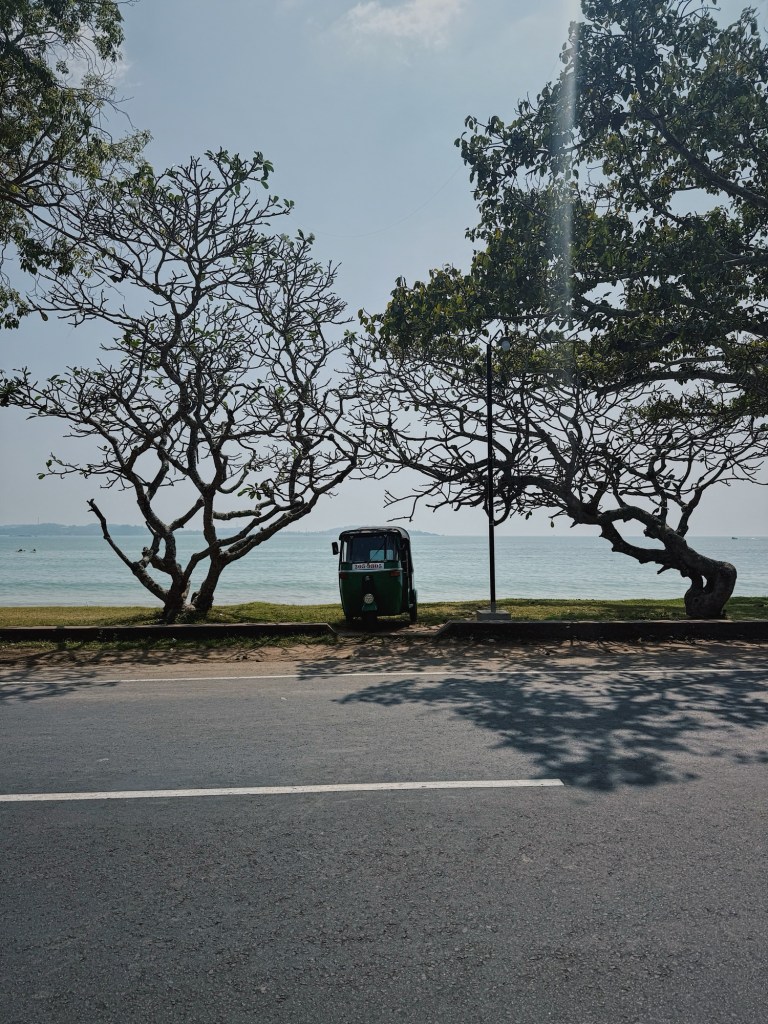
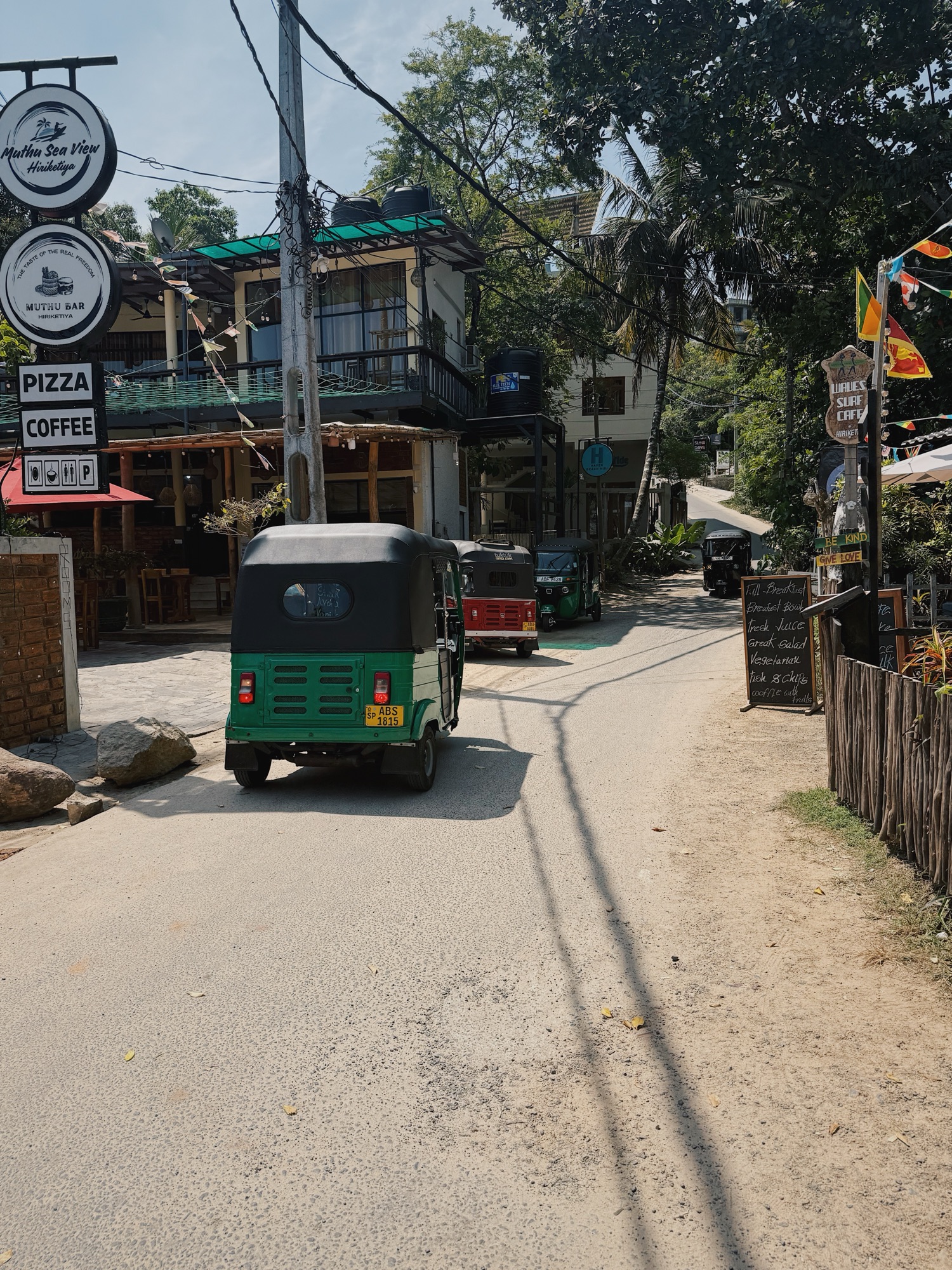
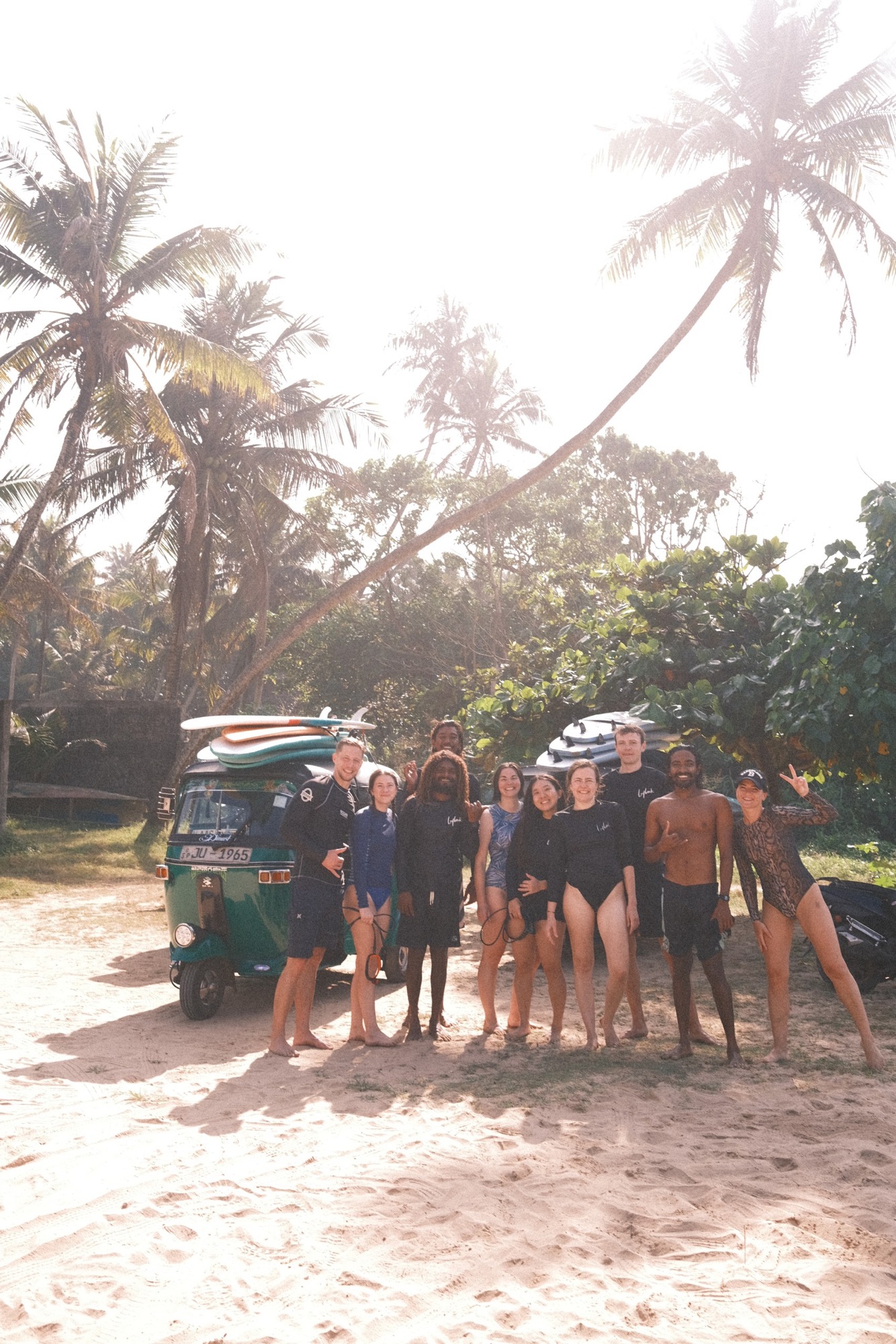
One of my favourite memories from the entire week was piling surfboards onto tuk-tuks and racing down to the beach each morning. Barefoot, covered in suncream and full of optimism, we’d weave through the streets of Weligama as the town slowly came to life around us.
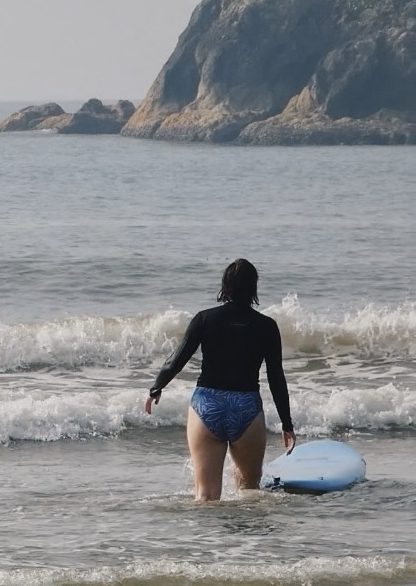
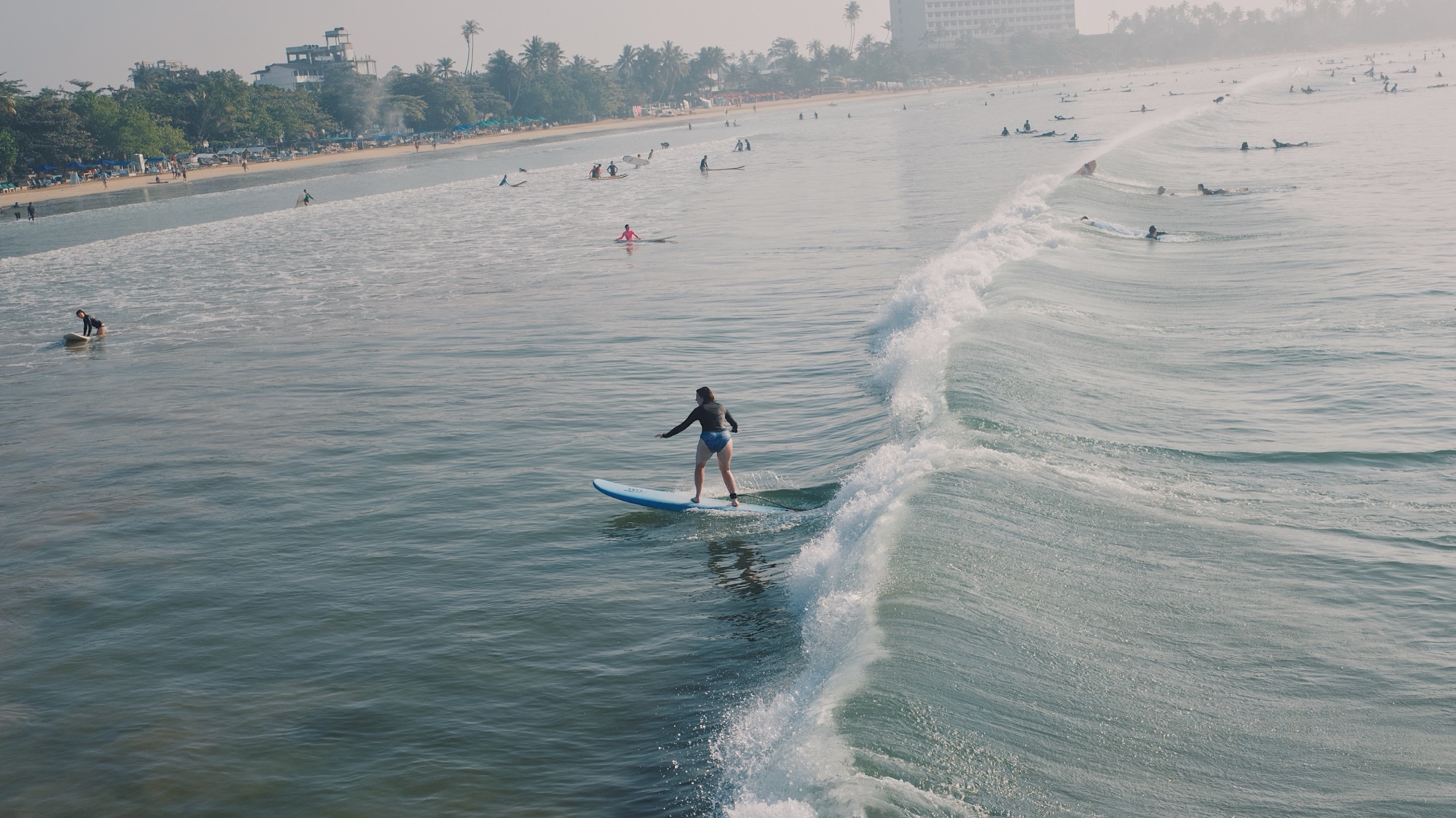
Our first session was at Weligama Beach, a long sandy bay known for its consistent waves and beginner-friendly conditions. Even so, I quickly discovered that surfing is hard work. Before I’d even reached the water, I was struggling to carry the board without bumping it into something.
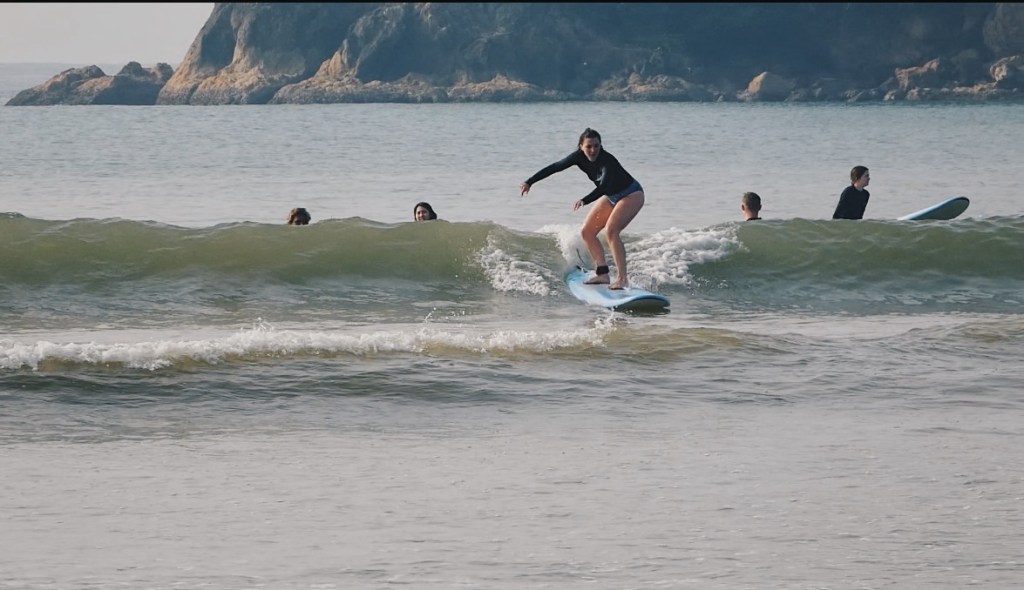
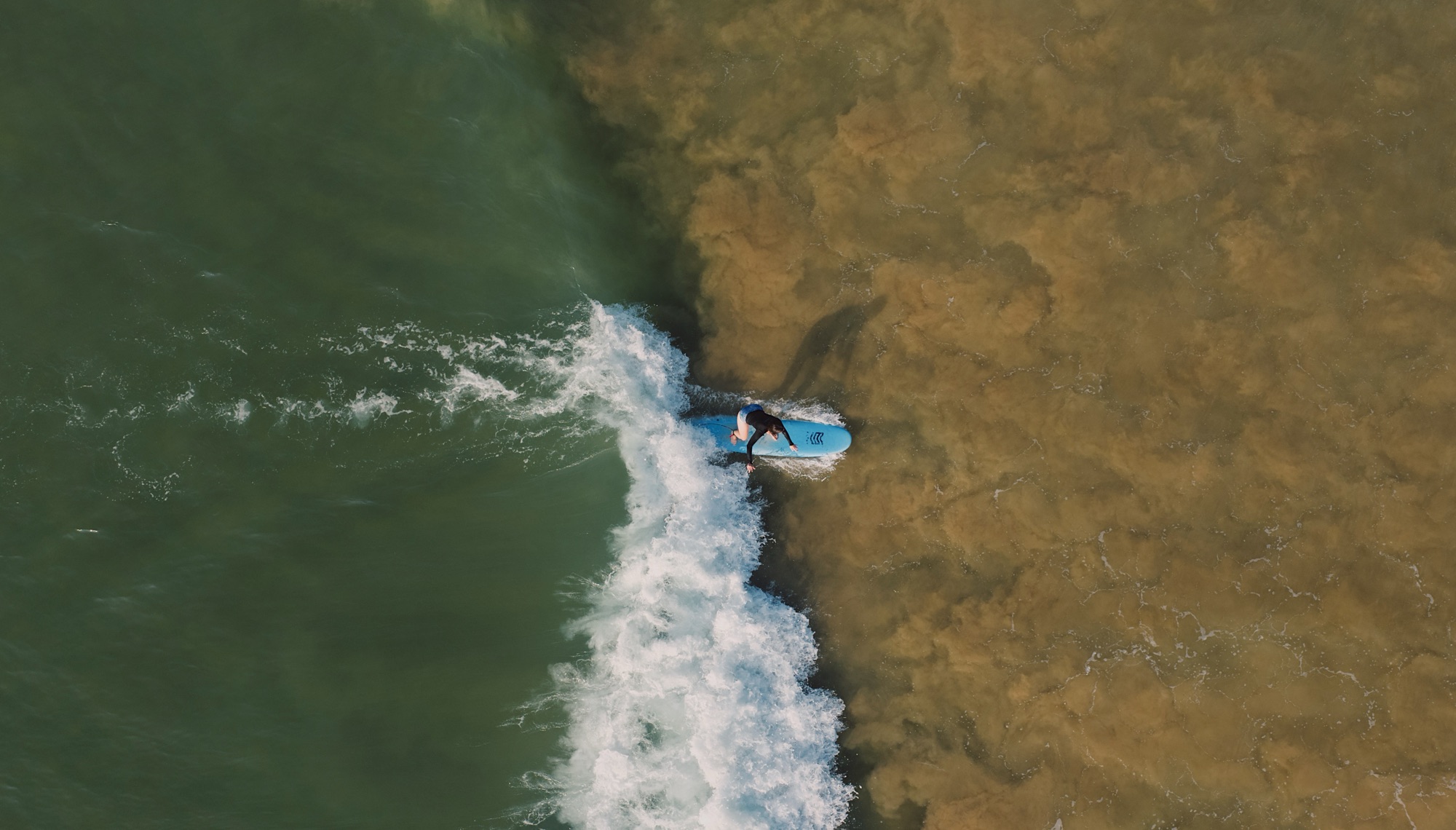
The instructors were fantastic from the start. Friendly, patient and endlessly encouraging, they helped us move beyond white-water waves and begin catching small green waves. To my surprise, I managed to catch quite a few. Once I was standing, my balance felt reasonably natural, probably thanks to years of paddleboarding. My biggest challenge was the pop-up. Every attempt seemed to involve a battle between my arms, my core and my determination not to use my knees. It wasn’t pretty, but it was progress.
Back at Layback, breakfast felt more like brunch after several hours in the ocean. Afterwards, I wandered over to Ceylon Sliders for an excellent coffee and a chance to relax before the afternoon activities.
That afternoon, we had video analysis. A videographer had filmed our session from the beach, and later we all gathered around a large projector to watch ourselves surf. Initially, it was painful.
There’s something uniquely humbling about watching yourself attempt a new sport on a giant screen. Once I got over the cringe factor, though, it became one of the most useful learning tools of the week. Seeing exactly where I was looking, standing and positioning myself made it much easier to understand what the instructors had been telling us in the water.
Later that evening, I signed up for another surf session with a small group. This time we headed to a different spot around the bay.
The conditions were completely different. The waves were noticeably larger than the gentle swell we’d surfed that morning and suddenly everything felt much more serious. The instructors worked overtime, helping us navigate the incoming sets and doing their best to stop us being completely demolished by the waves.
An hour later, I staggered out of the water exhausted. My arms felt like jelly, my shoulders ached and I could already feel muscles I’d forgotten existed.
It was only Day 1.
Day 2 – Learning to Slow Down
By the second morning, my enthusiasm from Day 1 had caught up with me.
The combination of sunrise yoga, two surf sessions and hours spent paddling had left me feeling unsurprisingly battered. Every muscle seemed to ache, particularly my shoulders and arms. As much as I wanted to throw myself straight back into the schedule, I couldn’t quite face a 6am yoga session or another early surf.
Instead, I did something I don’t always do very well: I chilled out!
I slept in a little longer, enjoyed a leisurely breakfast and spent the morning relaxing by the pool. Looking back, I probably should have paced myself better on the first day rather than signing up for every session available. It was a good reminder that surf camp isn’t a race, and there’s no prize for exhausting yourself in the first 24 hours.
Once I felt a bit more human, I headed out to explore Weligama. I wandered through the streets, browsed a few shops and soaked up the atmosphere of the town. It had changed a lot since my last visit seven years earlier, with new cafés, hotels and surf shops appearing around almost every corner, but it still retained the laid-back charm that had drawn me there in the first place.
That afternoon, we swapped the ocean for the swimming pool. The focus was on technique, specifically learning how to turtle roll. For the uninitiated, a turtle roll involves flipping yourself and the board upside down as a wave breaks over you, allowing you to get through the surf rather than being pushed back towards the beach.
It sounds straightforward. It isn’t.
Trying to coordinate my body, board and timing felt surprisingly awkward, and there was plenty of laughter as we all attempted to master the technique. Thankfully, making mistakes in a swimming pool is far less intimidating than doing it in the ocean.
It wasn’t the most action-packed day of the trip, but it was exactly what I needed. By the evening, my body felt recovered, my confidence was growing and I was ready to get back in the water.
Day 3 – Small Improvements
After my recovery day, I woke up feeling refreshed and ready to get back in the water.
The early start felt much easier this time and I headed down to the beach full of enthusiasm. I was determined to keep working on my pop-up, which had quickly become my biggest challenge. Every wave felt like another opportunity to practise, even if it wasn’t always pretty.
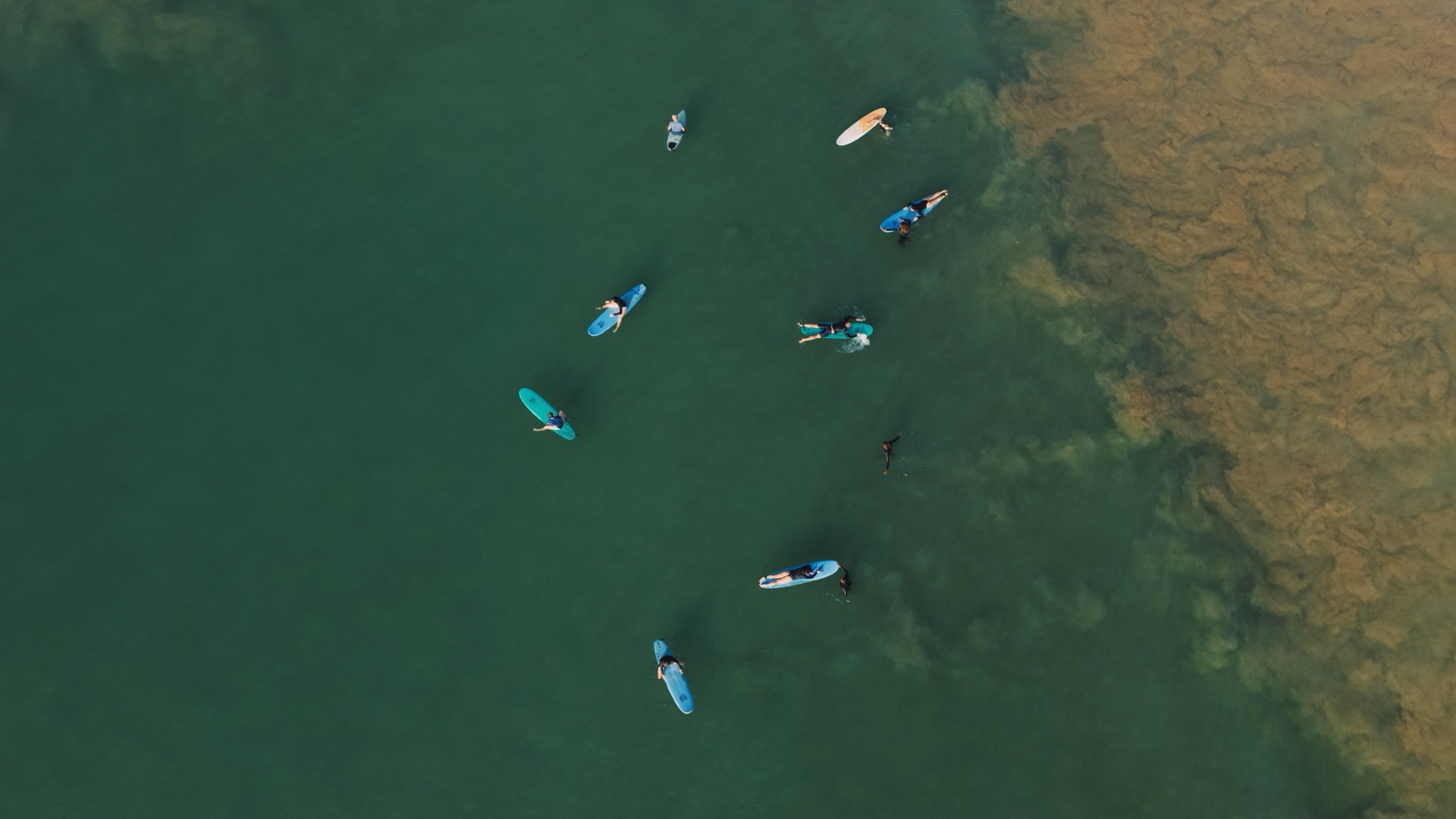
The beach was noticeably busier than earlier in the week, packed with beginner surfers all trying to catch the same waves. At times it felt slightly chaotic. During one wave, I nose-dived spectacularly and found myself on a collision course with another surfer. Thankfully, I managed to push his board away with my hand just before it hit me. Not exactly textbook surfing, but a successful bit of damage limitation nonetheless.
Despite a few mishaps, the session felt like a step forward. I caught some decent waves and could feel things slowly starting to click. There were still plenty of mistakes, but I was becoming more comfortable in the water and beginning to trust myself a little more. Heading back to Layback afterwards, I felt that satisfying combination of exhaustion and achievement that seems to come with every good surf session.
Breakfast was very well earned.
That afternoon we had another video analysis session. As awkward as it was watching myself on a giant screen, I could actually see the improvements I’d been trying to make. My positioning was better, my timing was improving and, occasionally, my pop-up even resembled something approaching proper technique. It was reassuring to see that the hours in the water were paying off.
Later in the day, we swapped surfboards for something completely different and joined a batik workshop. Batik is a traditional fabric-dyeing technique, and the class was held at the home of a local woman who had spent her entire life practising the craft before passing it on to her children.
It turned out to be one of the most wholesome experiences of the week. Sitting in her home, learning about a skill that had been handed down through generations, felt like a welcome contrast to the fast-paced rhythm of surf camp. It was a small glimpse into local life that I might otherwise have missed.
That evening, Layback had organised a night out. I was in two minds about going. Part of me wanted an early night, but another part knew I’d regret missing out.
We went to a town down the road to a place called the Doctors House. Music spilled out onto the street, it was packed and the atmosphere was infectious. We had a few drinks, a few dances and plenty of laughs. By that point, though, the combination of surfing and early starts was catching up with us. None of us lasted particularly late before piling into tuk-tuks and heading back to camp.
As fun as the night out was, I think we were all secretly looking forward to bed.
Day 4 – Coastal Wanderings
Day 4 was a free day, and after several days centred around surfing, I decided to explore a little further along Sri Lanka’s south coast.
That meant tackling the local buses.
I’d already checked the route on Google Maps, which made it seem wonderfully straightforward. In reality, as is often the case when travelling, things felt considerably more chaotic. The bus station was busy, people were calling out destinations, buses seemed to arrive and depart at random, and I spent a few minutes wondering if I was about to get on entirely the wrong one.
Eventually, I found my bus and squeezed aboard.
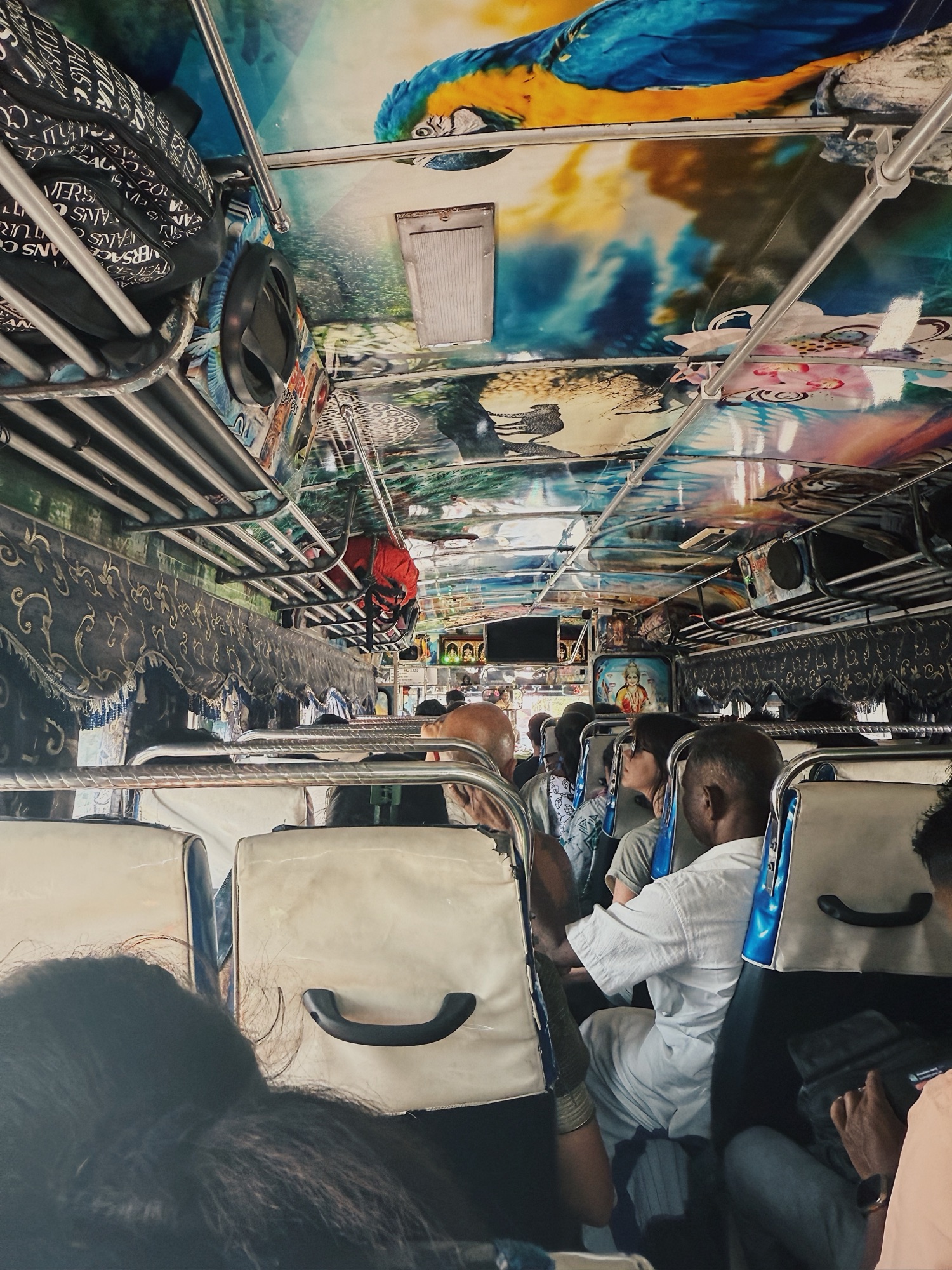
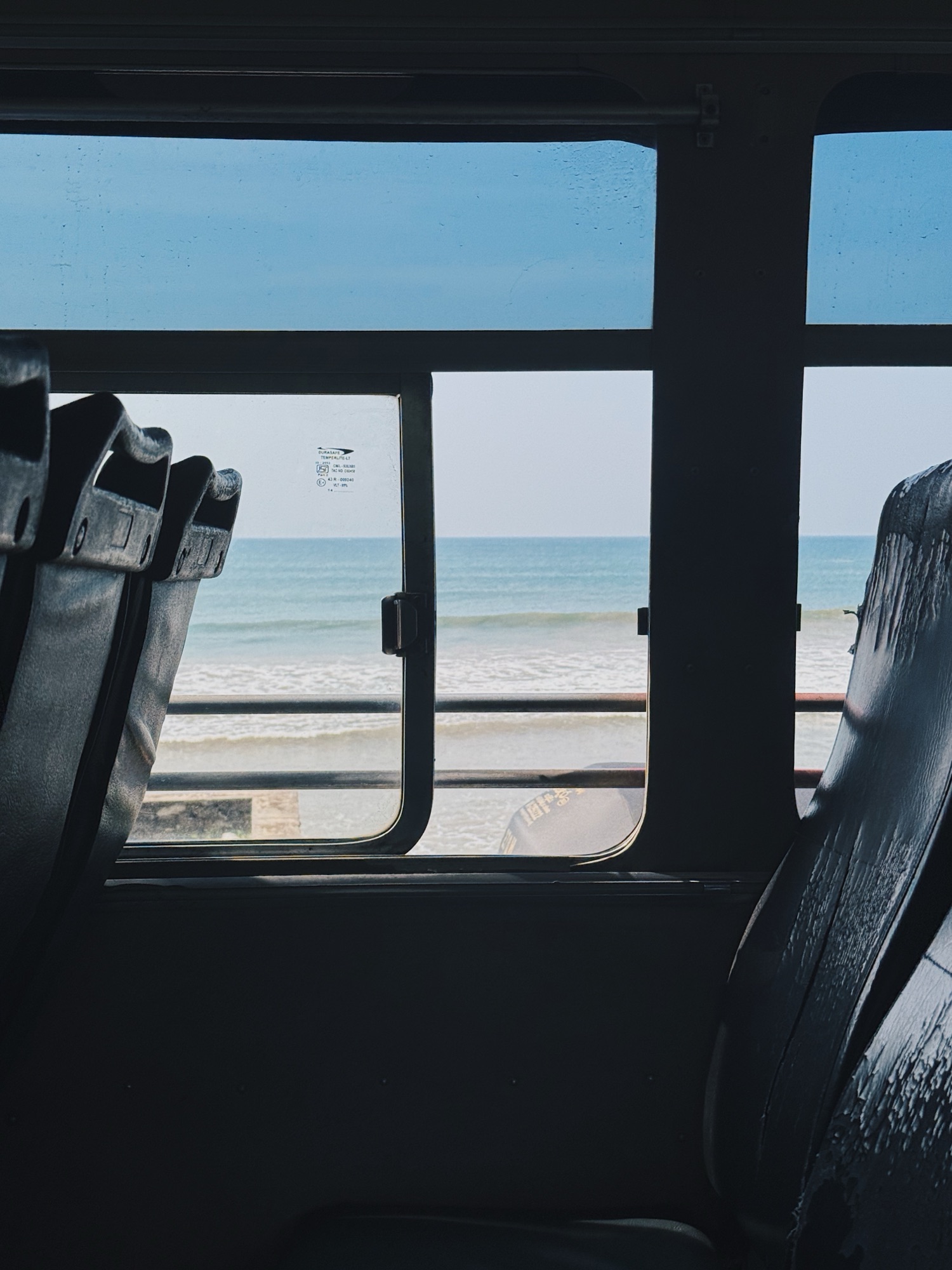
The buses in Sri Lanka are an experience in themselves. They’re colourful, loud and constantly busy. Music blasted through the speakers, people hopped on and off at seemingly every stop, and the whole journey felt wonderfully chaotic in the best possible way.
After about an hour, I arrived in Hiriketiya.
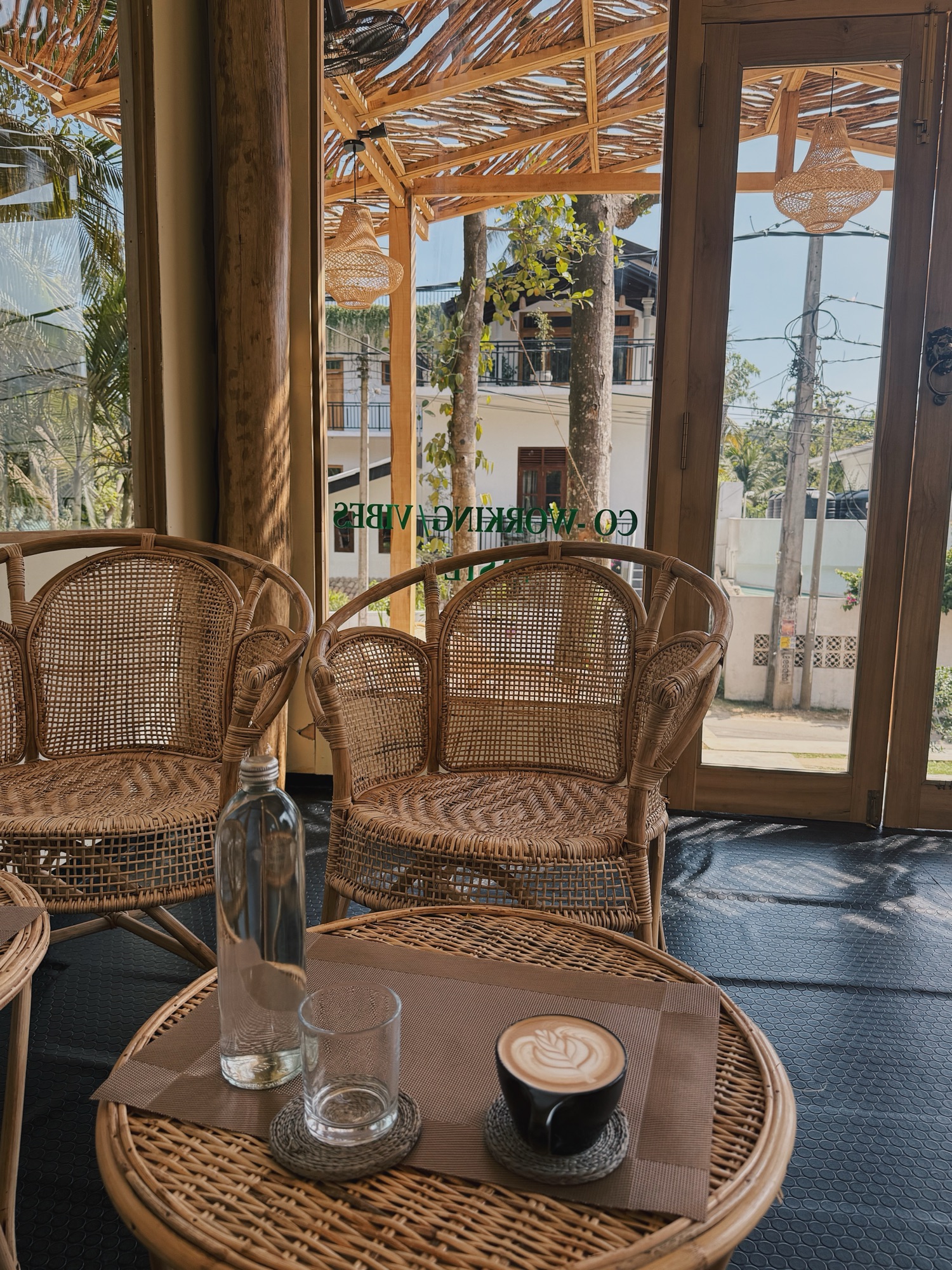
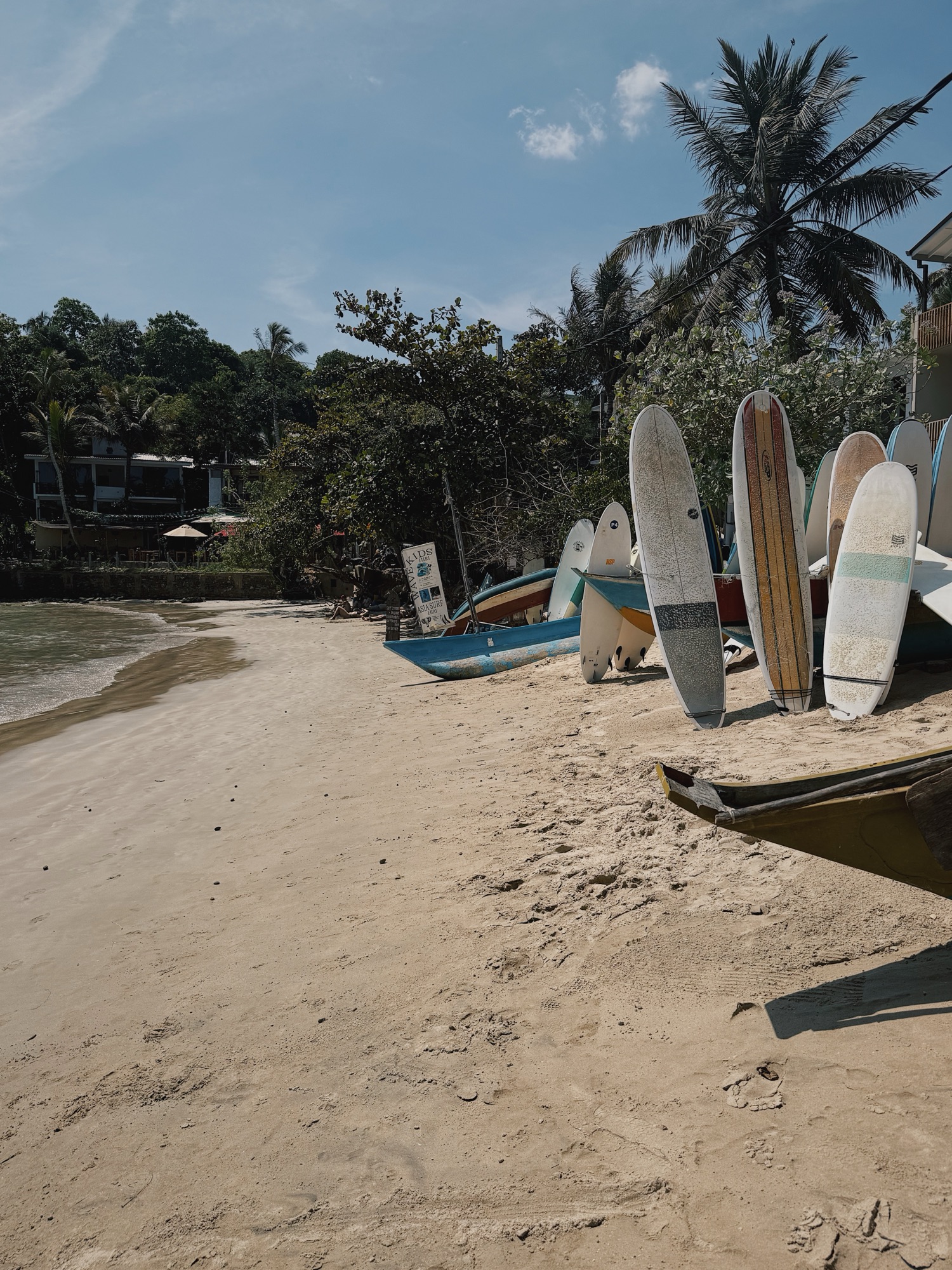
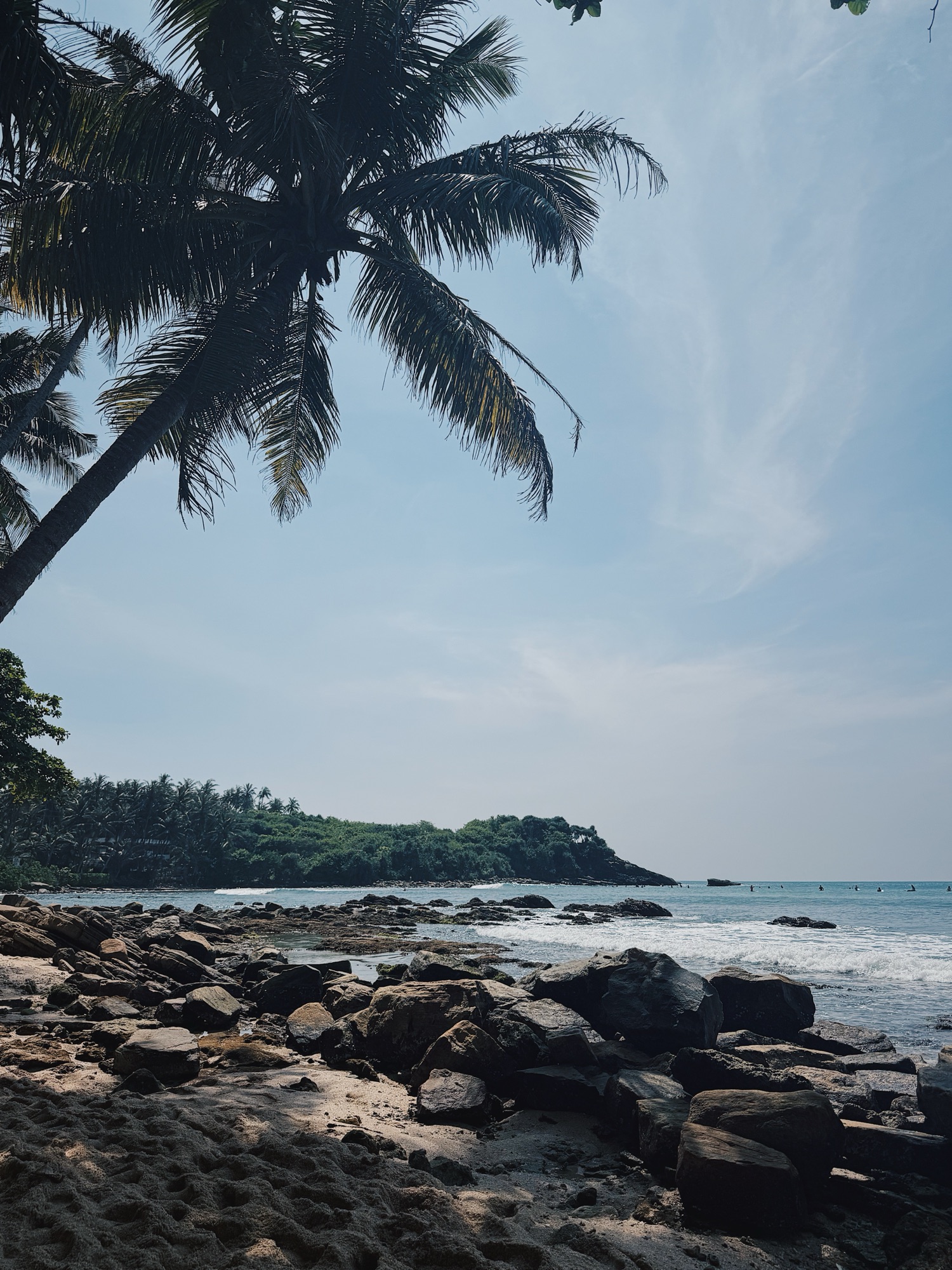
I’d heard plenty about this small beach village over recent years. Once a quiet surf spot, it has become one of Sri Lanka’s most popular destinations, attracting surfers, backpackers and digital nomads. Despite its growing popularity, it still manages to feel charming. The curved bay was packed with surfers, cafés spilled onto the streets and there was a relaxed atmosphere that encouraged lingering.
I spent a few hours wandering through the shops, stopping occasionally to watch the surfers in the line-up. There is something lovely about watching people catch waves, even when you’re not in the water yourself.
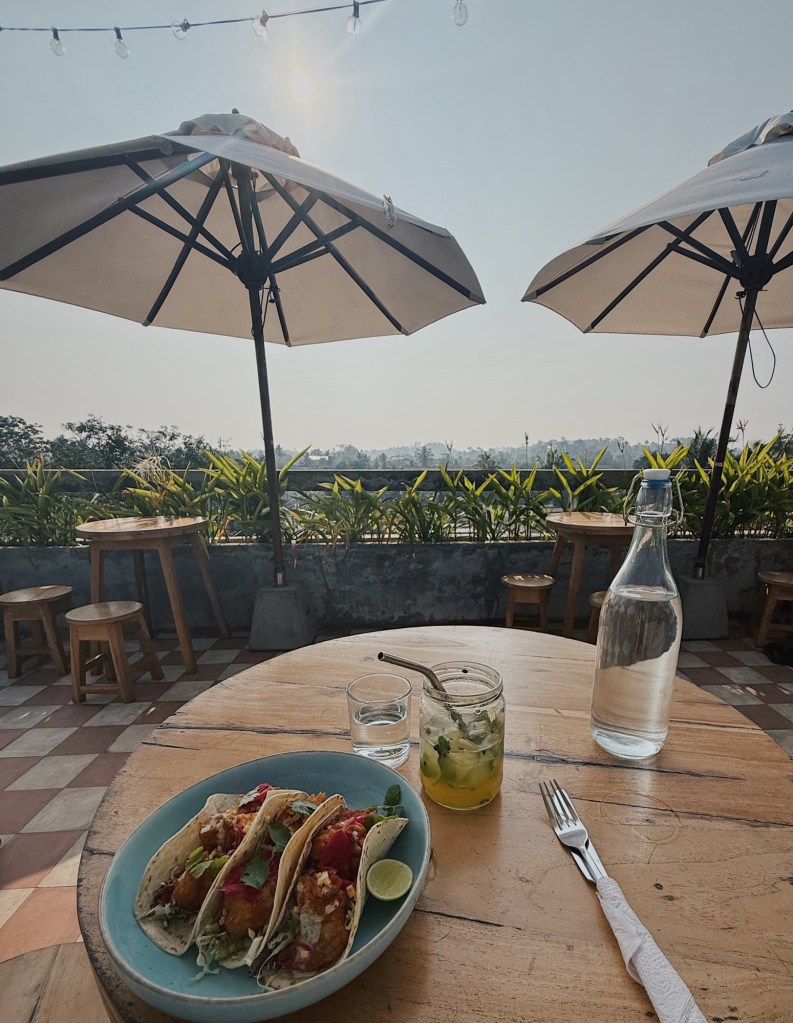
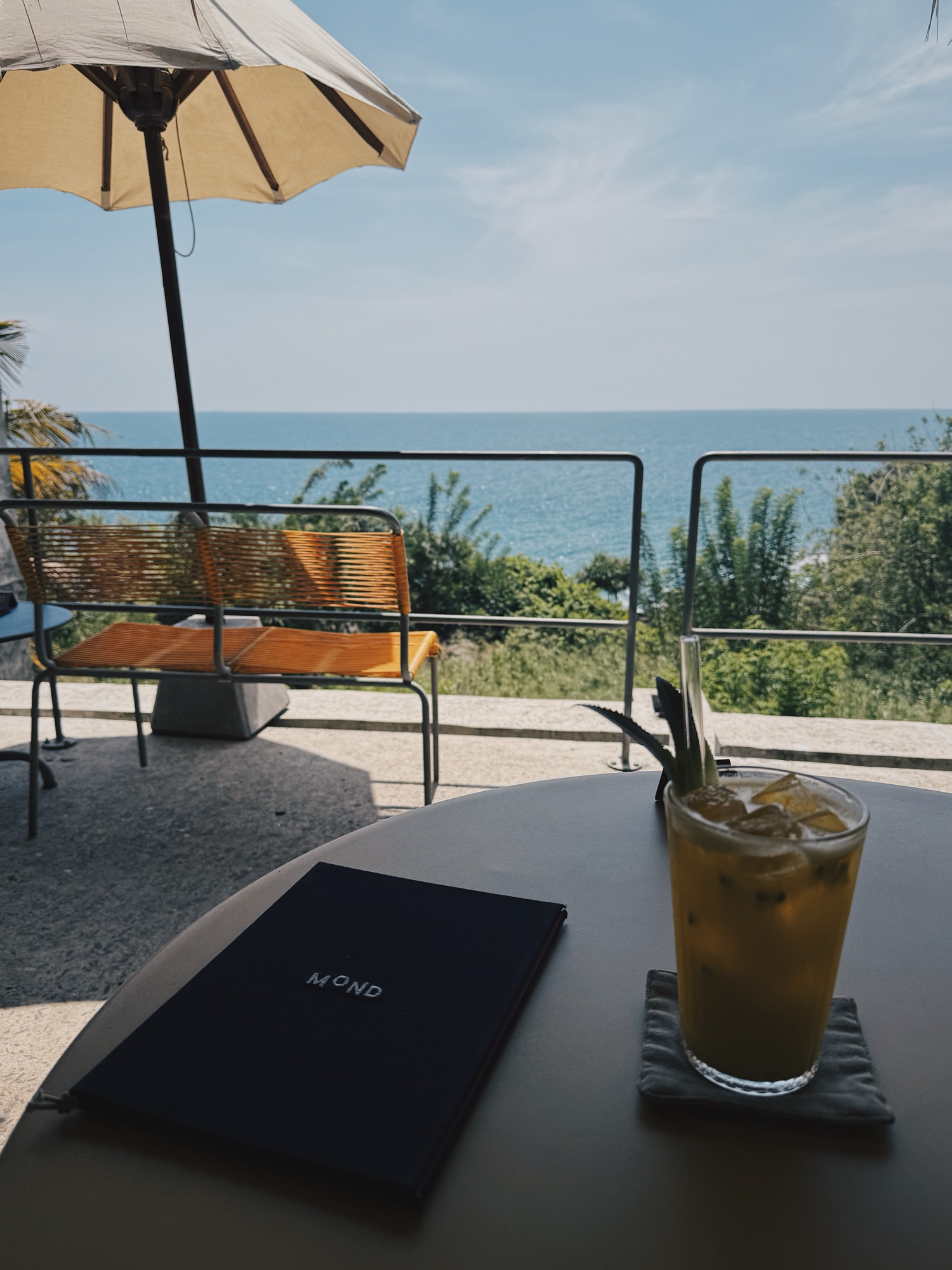
Later, I walked to Mond, a clifftop café overlooking the ocean. By this point, the heat was intense and the shade on the terrace was very welcome. Sitting with a cold drink and looking out across the coastline felt like the perfect way to spend a free afternoon.
While planning my return journey, I realised I had two options: navigate two separate buses with a change at Dickwella, or walk part of the route.
I chose to walk.
It turned out to be one of the best decisions of the day.
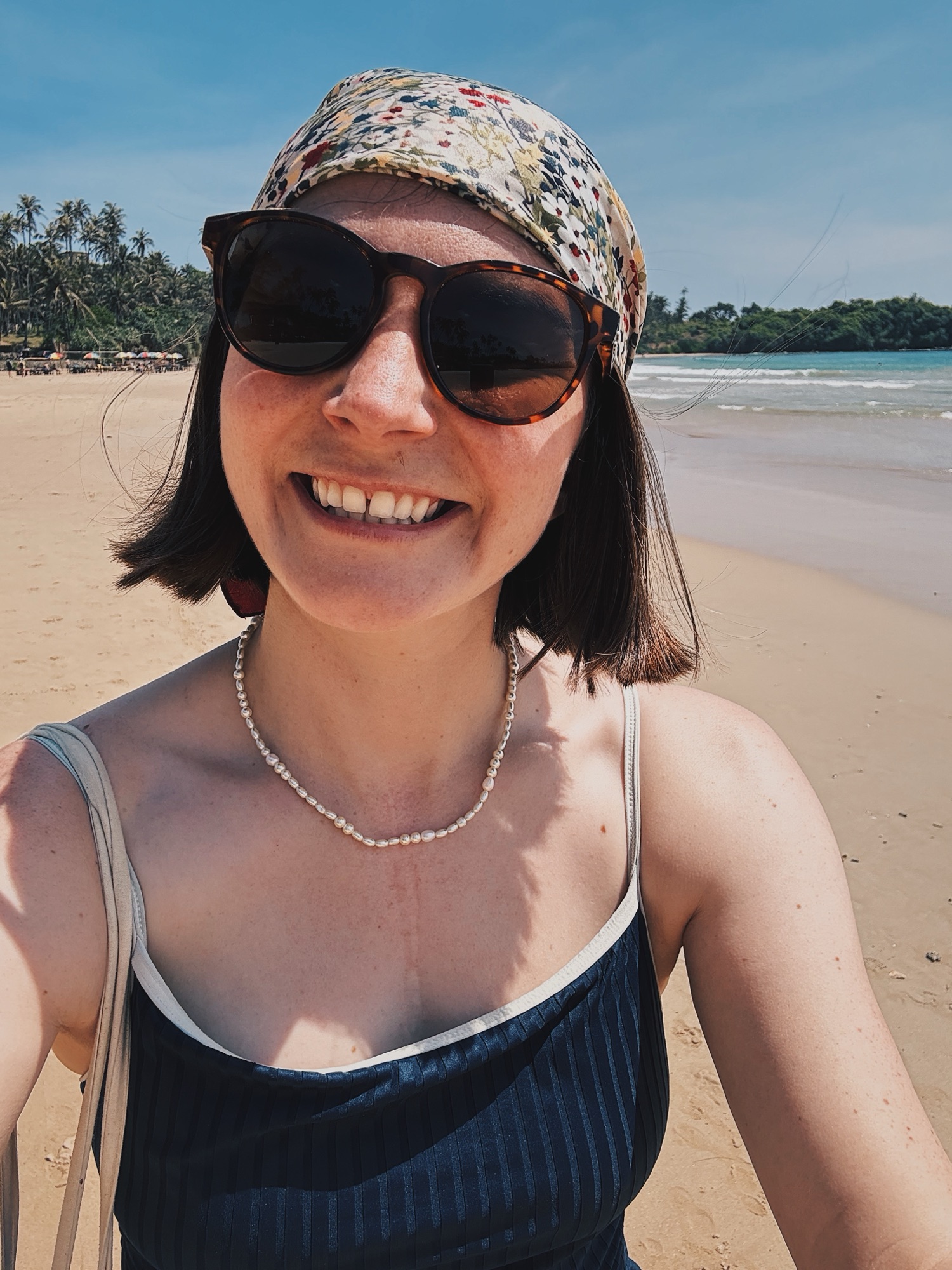
Along the way, I stumbled across Dickwella Beach, a beautiful stretch of coastline that felt a world away from the busy surf towns. The beach was almost empty, the sand stretched endlessly in both directions and the only sounds were the waves breaking on the shore and the occasional rustle of palm trees. It was one of those unexpected travel moments that can’t be planned and often become the most memorable.
By the time I reached the bus station, the afternoon sun was relentless. The bus eventually arrived, already packed with passengers. Inside, the air was hot and still, the seats stuck to the backs of your legs and the music was somehow even louder than it had been that morning.
I couldn’t help laughing.
The man sitting next to me noticed and chuckled. When I commented on the volume, he smiled and told me that even on his 5am commute to work, the buses were always like this.
As uncomfortable as the journey was, it felt oddly fitting. The buses are such a huge part of everyday life in Sri Lanka and travelling this way felt far more memorable than sitting in an air-conditioned taxi. Loud, chaotic and slightly exhausting, perhaps – but definitely an experience.
Back at Layback, I’d heard lots of people talking about getting massages throughout the week, so I decided to book one for that evening. After several days of surfing, a long day exploring and hours spent rattling around on Sri Lankan buses, it felt thoroughly appropriate. It was exactly what my tired shoulders and aching muscles needed, especially knowing I’d be back in the water again first thing the next morning.
Day 5: Finding My Rhythm
By Friday morning, everything was beginning to feel familiar.
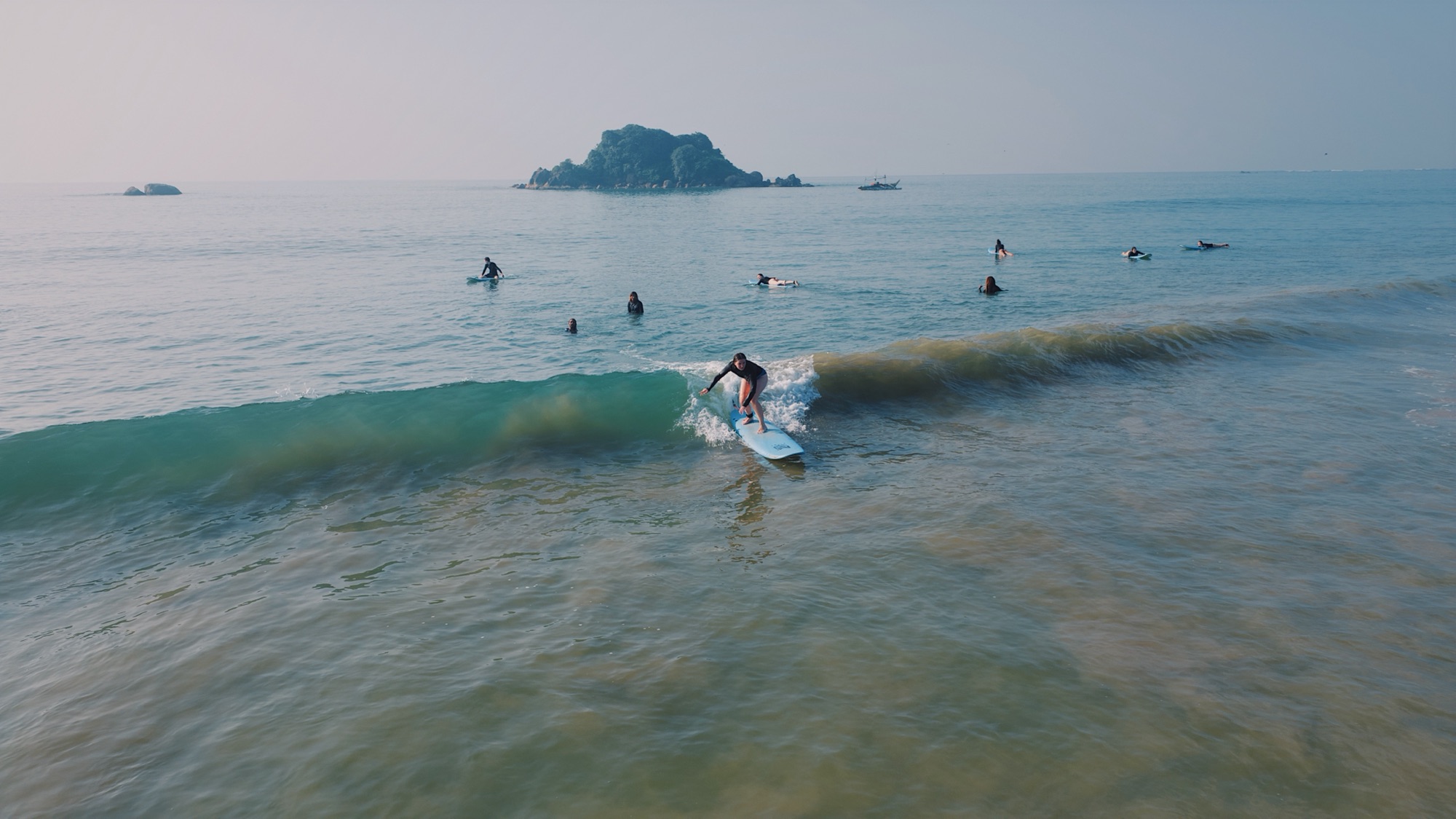
We headed back to Weligama Beach for another early surf session, but this time things felt different. Rather than relying on the instructors to position me for every wave, they encouraged us to paddle out and make more of our own decisions, offering guidance from the water instead.
It was challenging, but incredibly rewarding.
I could feel myself starting to read the waves more confidently. I was beginning to recognise where the waves would break, understand the difference between left and right-hand waves and think about which direction I should be turning once I was on my feet. There was still plenty to learn, but for the first time I felt like I was actually surfing rather than simply following instructions.
After another well-earned breakfast, there was a gap in the schedule, so I jumped in a tuk-tuk and headed north to Ahangama for a few hours.
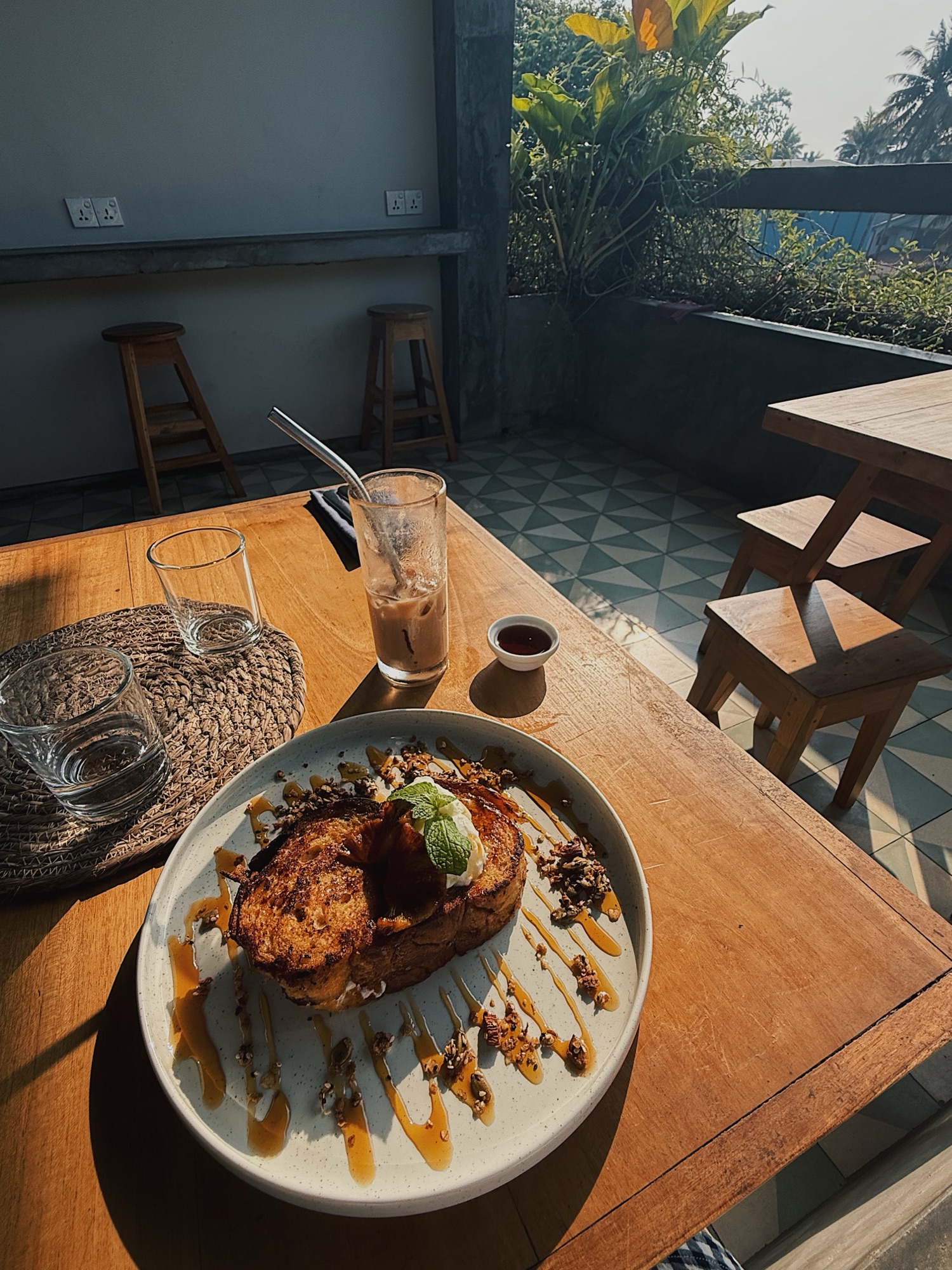
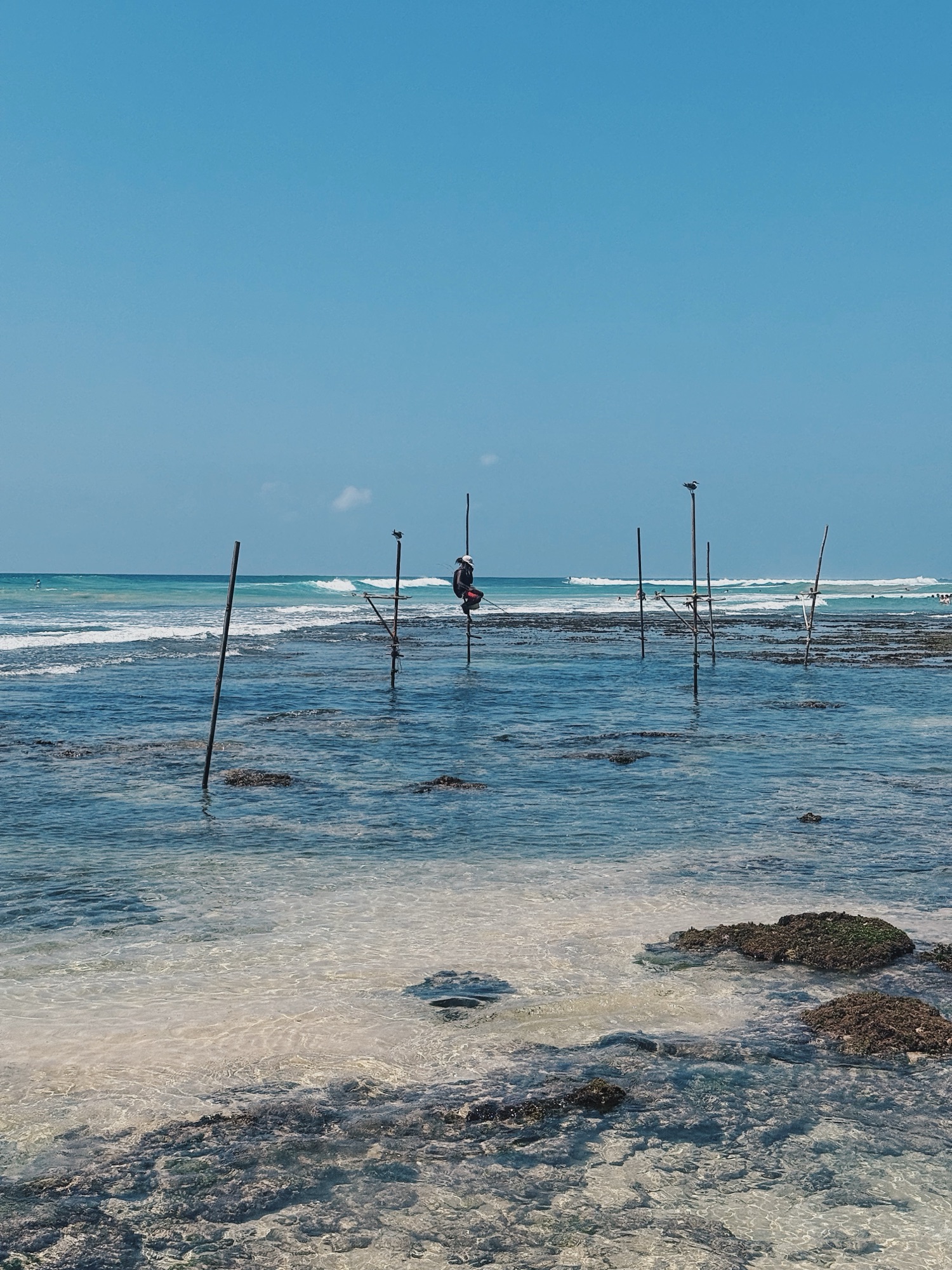
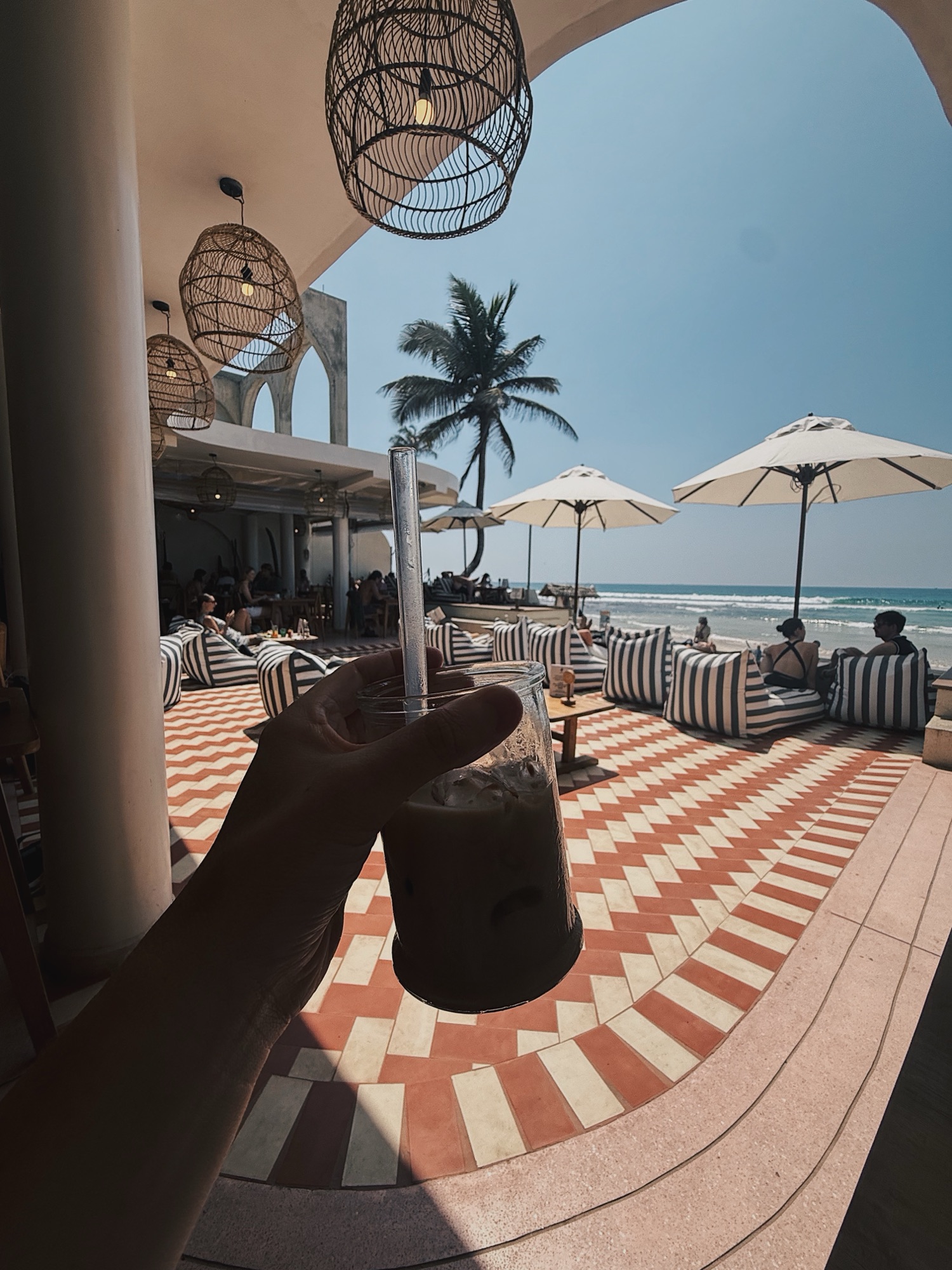
My first stop was Cactus, one of the area’s popular cafés, where I had coffee before wandering along the beach. I watched the famous stilt fishermen patiently waiting above the waves, browsed the small boutiques and local markets, and simply enjoyed slowing the pace for a while.
While I was there, I also visited the hostel and café that a friend of a friend had built. It was incredibly impressive to see what they’d created, and hearing the story behind it made the visit even more interesting.
By mid-afternoon, I was back at Layback in time for our second surf theory session. As with the video analysis, it helped connect what we were learning in the water with the technical side of surfing, giving me a much better understanding of why certain techniques worked.
That evening was one of my favourite activities of the week.
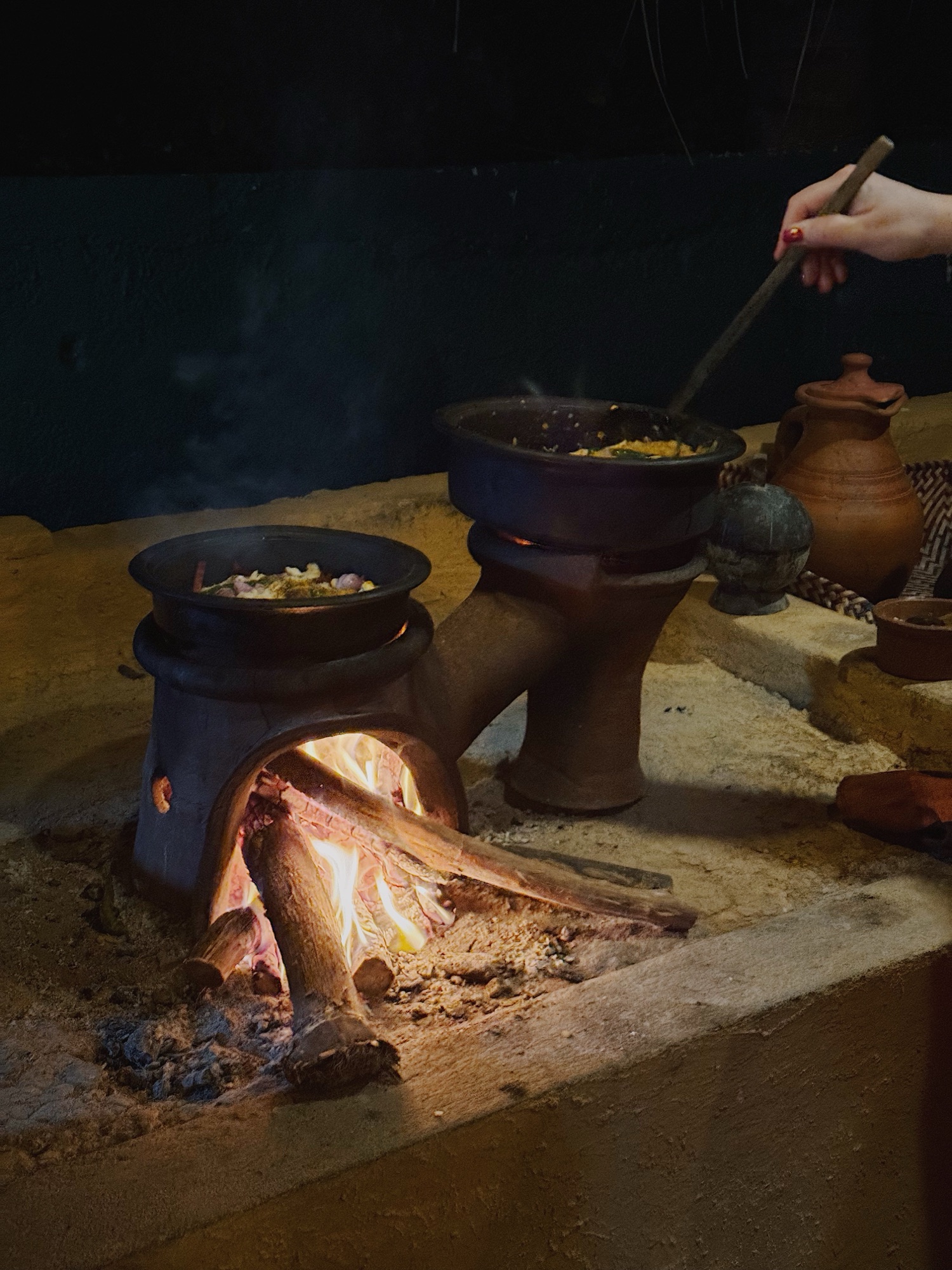
Layback had organised a Sri Lankan cooking class at a local family’s home, alongside a few other travellers from outside the camp. We learnt to prepare a selection of traditional curries, rice and poppadoms using clay ovens and time-honoured cooking methods that had been passed down through generations.
There was something really special about standing in someone’s home, cooking recipes that had been part of their family for years rather than attending a polished tourist demonstration. We laughed, chopped vegetables, stirred fragrant curries and, of course, enjoyed eating everything we’d made together afterwards.
It was the perfect way to end another brilliant day.
Day 6: One Last Wave
It was hard to believe it was already the final day.
We headed to a different surf spot further down the coast for one last early morning session. The waves were noticeably bigger than I’d surfed earlier in the week and, after six days of early mornings, yoga and countless hours paddling, I could definitely feel the fatigue in my shoulders.
Even so, I managed to catch a good few waves.
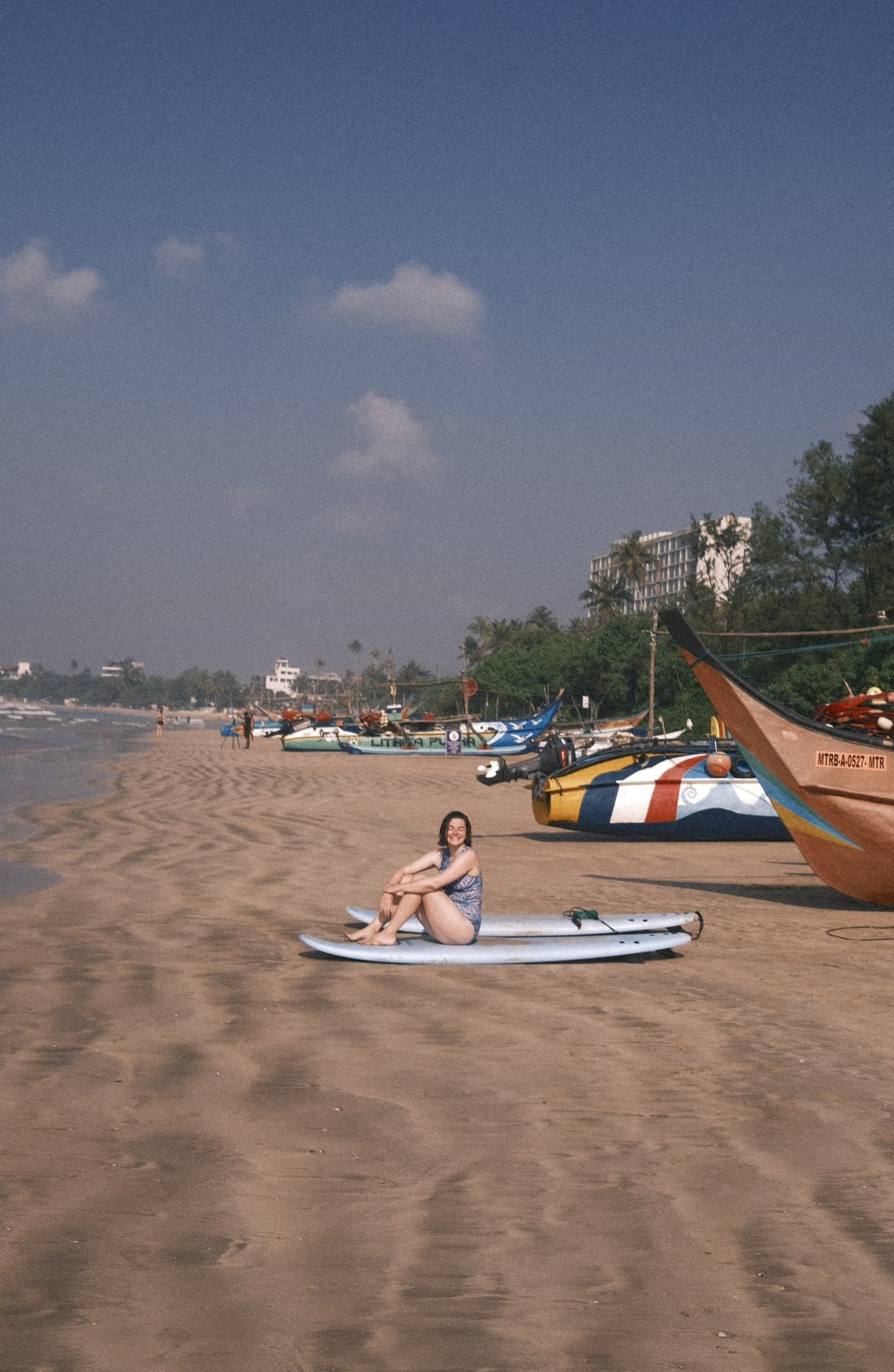
Eventually, as the swell continued to build, I decided to call it a day. Rather than forcing myself to stay out, I wanted to end on a positive note. I climbed onto the beach and simply enjoyed watching everyone else surf. It felt surprisingly satisfying to sit back for a while and reflect on how much I’d learnt over the week.
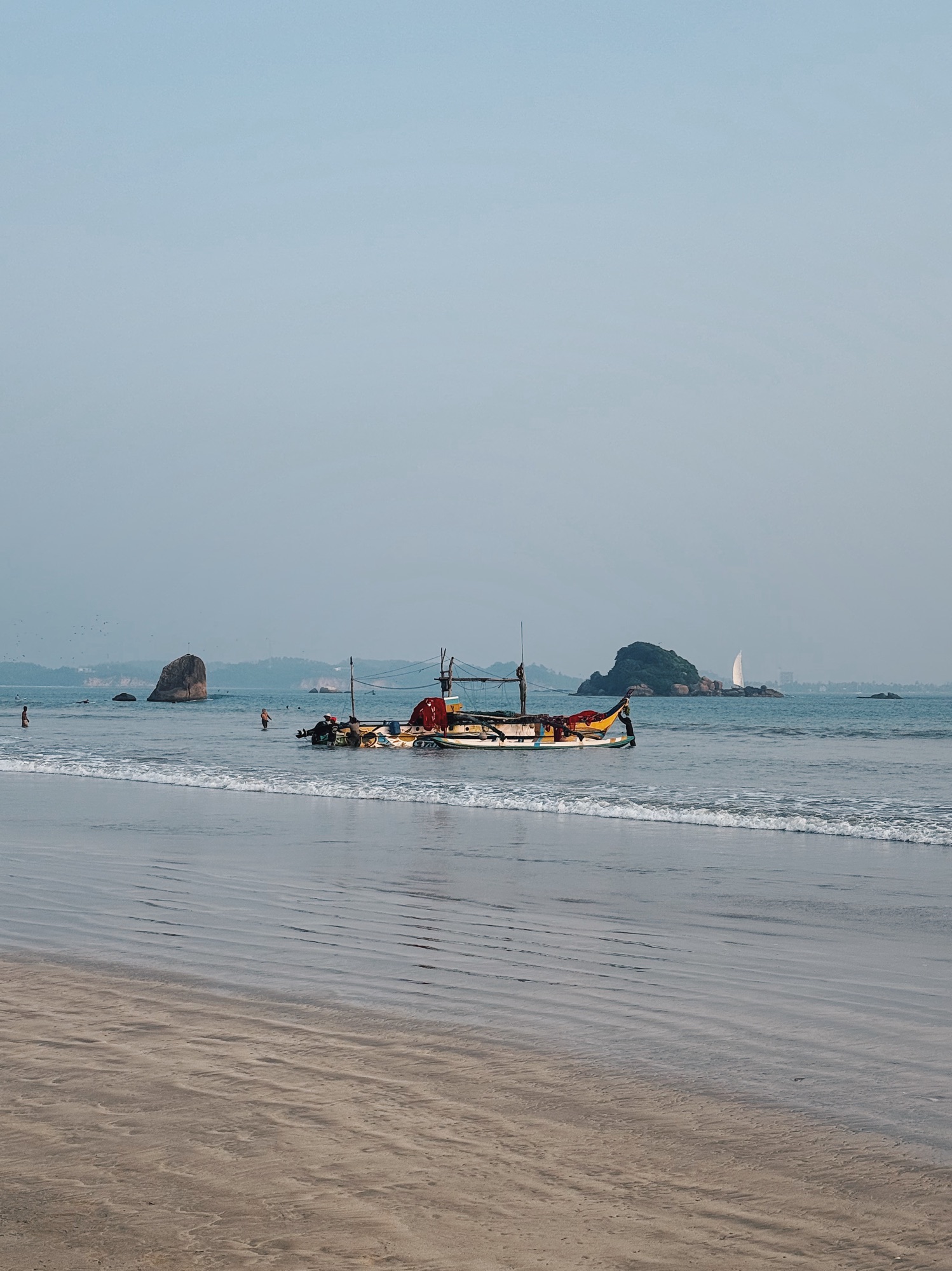
As I watched, a group of local fishermen returned to shore with their boat. Once they’d landed, they began hauling it further up the beach using a series of wooden rollers placed underneath the hull. It looked like an enormous effort, so when they gestured for an extra pair of hands, I wandered over to help. Together, we pushed the heavy boat further up the sand, rolling it forwards one log at a time.
After surfing and breakfast, I wandered back along Weligama Beach, stopping at Nomad Café for a coffee while watching the rest of morning unfold. By now, the town felt wonderfully familiar again.
Back at Layback, the afternoon was spent doing exactly what surf camps seem to do best: bringing people together. We ended up playing pool volleyball, which quickly became far more competitive than anyone expected, with plenty of laughter along the way.
Later, afternoon yoga couldn’t have come at a better time. After a week of surfing, my body was grateful for the chance to slow down, stretch aching muscles and unwind one last time.
That evening, in true Layback style, everyone gathered on the rooftop for one final family dinner.
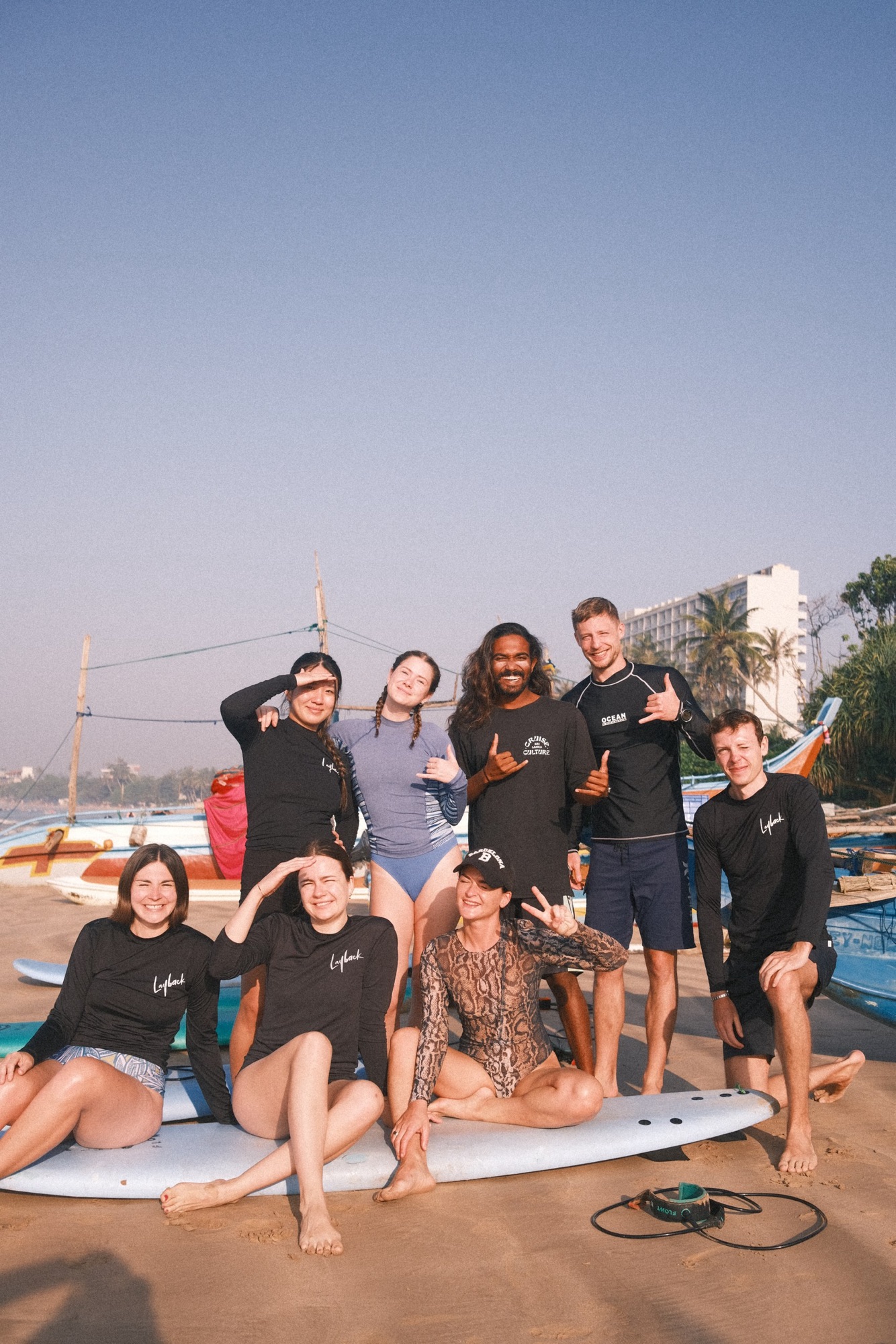
Over delicious Sri Lankan food, we swapped stories from the week, laughed about our wipeouts, celebrated each other’s progress and reflected on everything we’d experienced together. It was strange how quickly a group of strangers had become familiar faces.
Eventually, the evening came to an end and it was time to say our goodbyes. Some people were heading home, others were travelling elsewhere around Sri Lanka, but for one week we’d all shared the same early mornings, the same waves and the same unforgettable experience.
It felt like a very fitting way to end the week.
Day 7: Heading Home
Checkout came around far too quickly. That morning, I shared a taxi back to Colombo Airport with another lady from the camp. We spent the journey chatting about the week, replaying our favourite moments. Eventually, our paths split as we headed to different departure gates.
As the plane lifted off over Sri Lanka’s coastline, I found myself thinking about the week as a whole. I’d arrived hoping to improve my surfing, but I left with far more than that.
Final Thoughts
When I booked a week at Layback Surf Camp, I expected good waves, warm weather and hopefully to become a slightly better surfer. I just wanted to immerse myself in something.
There’s something about a surf camp that naturally brings people together. Maybe it’s the shared challenge of learning something new, celebrating each other’s small victories or laughing together after spectacular wipeouts. Whatever the reason, the atmosphere at Layback never felt forced. It simply felt welcoming.
The coaches were a huge part of that.
Every instructor was patient, encouraging and genuinely invested in helping everyone improve, regardless of ability. As a beginner who had only surfed a handful of times before arriving, I never once felt out of my depth or embarrassed to ask questions. Every improvement, no matter how small, was celebrated.
I also loved the balance the camp offered. It wasn’t simply about surfing. Between yoga sessions, surf theory, video analysis, cooking classes, cultural workshops and evenings spent chatting over family-style dinners, every day felt varied without ever feeling rushed.
The accommodation struck exactly the right balance too. Having my own room meant I could recharge when I wanted to, while the communal spaces made it incredibly easy to meet people. It had all the friendliness of a hostel, but with enough space to enjoy a little peace and quiet when needed.
Looking back, one of the biggest lessons from the week wasn’t actually about surfing.
It was about slowing down and immersing myself in something.
Life became wonderfully simple. Wake up with the sunrise. Surf. Eat good food. Drink great coffee. Watch the ocean. Chat with new friends. Sleep. Then wake up and do it all again.
Somewhere amongst that routine, the usual mental clutter disappeared.
Surfing has a way of demanding your full attention. You can’t think about work, your to-do list or what you’re having for dinner when you’re trying to read the next wave heading towards you. The ocean has a remarkable ability to pull you into the present moment.
I also left with a new appreciation for how rewarding it is to be a beginner. In everyday life, we often shy away from things we’re not immediately good at. Surfing reminded me that progress comes from falling off, making mistakes, laughing at yourself and simply trying again. Every successful wave felt earned because there had been countless failed attempts beforehand.
Would I return to Layback? Without hesitation.
Whether you’re travelling solo, looking to improve your surfing or simply wanting a week that combines adventure, community and a slower pace of life, I honestly can’t recommend it highly enough.
I boarded the plane home with tired shoulders, a calmer mind and a camera roll full of memories and an even longer list of places I’d like to explore next time.
Because one thing is certain… I’ll be back in Sri Lanka.
Ness x
 Ness' bit of everything